
Watching Jude Law Digging a Hole
Negative Dialectics and the Audience in HBO/Punchdrunk’s The Third Day: Autumn
DOI:
https://doi.org/10.7146/peri.v22i40.157643Nøgleord:
Immersive theatre, audience, television series, critique, Adorno, Beckett, non-identityResumé
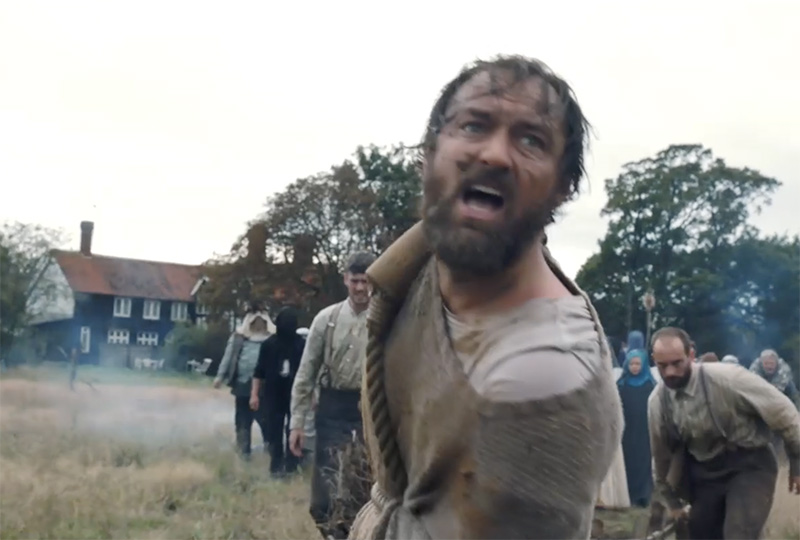
This article1 is based on Punchdrunk/Sky’s The Third Day: Autumn, which was experienced as a livestream featuring Jude Law in a 12-hour event on HBO’s Facebook page in 2020, during the Covid-19 lockdown. Through an analysis of audience responses in social media comments to Law as both a person and a character, I discuss shifts in realism within the reception, while examining the relationship between fiction and reality. This leads to an interpretation of the streaming event as a variation of immersive theatre, while acknowledging the differences in audience positioning due to the medium. Within this analytical framework and the examination of the dimension of reality, I draw comparisons to Theodor Adorno’s reading of Beckett’s Endgame; a discussion that extends to the type of critique that emerges in the comment section of the Autumn livestream. I hope to demonstrate that the way this televised live event, through Law’s performance, shifts the boundaries of representational fiction challenges Adorno’s idea of negative dialectics and the transparency between thought and object. What this means is that the social media comments can be viewed as a form of ‘critique’ that may be even more critical than the explicitly proclaimed criticism, even if it originates from amateurs rather than trained professionals and reviewers. It becomes a critique that is more closely aligned with what one journalist reviewing The Third Day: Autumn referred to as “just reality”, rather than fiction striving conceptually to imitate reality.
Referencer
Adorno, Theodor W. 1964. Moments musicaux. Frankfurt am Main: Surhkamp.
Adorno, Theodor W. 1978. Minima Moralia: Reflections on Damaged Life. Translated by E. F. N. Jephcott. London: Verso.
Adorno, Theodor W. 1985. “Subject and Object”. The Essential Frankfurt School Reader, edited by Andrew Arato & Eike Gebhardt. New York: Continuum.
Adorno, Theodor W. 1990. Negative Dialectics. Translated by E. B. Ashton. London: Routledge.
Adorno, Theodor W. 1991. In Search of Wagner. Translated by R. Livingstone. London: Verso.
Adorno, Theodor W. 1998a. Quasi Una Fantasia: Essays on modern music. London: Verso.
Adorno, Theodor W. 1998b. “Beethoven’s Late Style”. Beethoven: The Philosophy of Music, edited by Rolf Tiedemann. Cambridge: Polity Press.
Adorno, Theodor W. 2019. Notes to Literature. Translated by Shierry Weber Nicholson. New York: Columbia University Press.
Adorno, Theodor W. Else Frenkel-Brunswik, Daniel Levinson, and Nevitt Sanford, eds. 1950. The Authoritarian Personality. London: Harper.
Adorno, Theodor W. and Max Horkheimer. 2002. Dialectic of Enlightenment: Philosophical Fragments, edited by Gunzelin Schmid Noerr. Translated by Edmund Jephcott. Stanford: Stanford University Press.
Bastién, Angelica Jade. 2017. “The Dangerous Beauty of Jude Law.” Vulture, January 30. https://www.vulture.com/2017/01/jude-law-dangerous-beauty-young-pope.html.
Baudrillard, Jean. 1993. The Transparency of Evil: Essays in Extreme Phenomena. London: Verso.
Beckett, Samuel. [1957] 2009. Endgame. London: Faber & Faber.
Biggin, Rose. 2017. Immersive Theatre and Audience Experience: Space, Game and Story in the Work of Punchdrunk. London: Palgrave Macmillan.
Bolt, Mikkel. 2013. Avantgardens selvmord. Copenhagen: Antipyrine.
Bürger, Peter. 1984. Theory of the Avant-Garde. Manchester: Manchester University Press/University of Minnesota Press.
Cook, Deborah. 2001. “Adorno, ideology, and ideology critique.” Philosophy & Social Criticism 27 (1): 1-20.
Edgar, Andrew. 1999. “Culture and Criticism: Adorno”. In The Edinburgh Encylopedia of Continental Philosophy, edited by Simon Glendinning, 448-460. Edinburgh: Edinburgh University Press.
Fensham, Rachel. 2021. Theory for Theatre Studies: Movement. London: Methuen Drama.
Freyenhagen, Fabian. 2008. “No Easy Way Out: Adorno’s Negativism and the Problem of Normativity”. In Nostalgia for a Redeemed Future: Critical Theory edited by S. Giacchetti Ludovisi, 39-50. Newark, DE: University of Delaware Press.
Frieze, James, ed. 2016. Reframing Immersive Theatre: The Politics and Pragmatics of Participatory Performance. London: Palgrave MacMillan.
Geuss, Raymond. 1975. “Negative Dialectics.” Journal of Philosophy, LXXII no. 6: 167-75.
Hegel, Georg Wilhelm Friedrich. 2010. The Science of Logic. Translated by George Di Giovanni. Cambridge, New York: Cambridge University Press.
Hogarth, Sarah. et al. 2018. “Immersive Worlds: An Exploration into how Performers Facilitate the Three Worlds in Immersive Performance”. Theatre, Dance and Performance Training 9 (2): 189-202.
Holmes, Su. 2010. “The Changing Spaces of Celebrity Politics”. Celebrity Studies 1 (3): 292-309.
IndieWire. 2020. “’The Third Day’ Live, Explained”. October 2, 2020. https://www.indiewire.com/features/general/the-third-day-live-episode-explained-how-to-watch-live-stream-autumn-1234589739/.
Iser, Wolfgang. 1974. The Implied Reader: Patterns of Communication in Prose Fiction from Bunyan to Beckett. Baltimore: Johns Hopkins University Press.
Jay, Martin. 1996. The Dialectical Imagination: A History of the Frankfurt School and the Institute of Social Research, 1923-1950. Berkeley: University of California Press.
Kalia, Ammar. 2020. “Jude Law live for 12 hours – The Third Day: Autumn pushed boundaries, but was it good?”. The Guardian, October 5.
Kirkpatrick, Graeme. 2018. “Ludic form and contemporary performance arts”. Journal for cultural Research 18 (4): 325-341.
Letterboxd. “The Third Day: Autumn”. https://letterboxd.com/film/the-third-day-autumn/.
Machamer, Josh, ed. 2017. Immersive Theatre: Engaging the Audience. Common Ground Research Networks.
Machon, Josephine. 2013. Immersive Theatres: Intimacy and Immediacy in Contemporary Performance. London: Palgrave Macmillan.
Machon, Josephine. 2016. “Watching, Attending, Sense-making: Spectatorship in Immersive Theatres”. Journal of Contemporary Drama in English 4 (1): 34-48. https://doi.org/10.1515/jcde-2016-0004.
Medium.com. Sitdowncomedian. 2020. “The Third Day Live: Autumn”. October 5.
Mitra, Royona. 2016. “Decolonizing Immersion” Performance Research 21 (5): 89-100.
O’Connor, Brian. 2004. Adorno’s Negative Dialectic: Philosophy and the Possibility of Critical Rationality. Cambridge, MA.: MIT Press.
Radish, Christina. 2020. “‘The Third Day’ Creators on Landing Jude Law and Filming a Live Episode During a Pandemic”. Collider, September 21. https://collider.com/the-third-day-hbo-interview-felix-barrett-dennis-kelly/.
Ramos, Jorge Lopes et al. 2020, “The Post-Immersive Manifesto” International Journal of Performance Arts and Digital Media 16 (2): 196-212.
Rancière, Jacques. 2007. “The Emancipated Spectator” Artforum, March: 271-91.
Reilly, Karen. 2019. “Entanglement, Performance, and the Ethics of Intimacy in Then She Fell”. TDR: The Drama Review 63 (4): 127-140.
Richardson, Brian. 2007. “Singular Text, Multiple Implied Readers”. Narrative and Self-Knowledge 41 (3): 259-274.
Ritman, Alex. 2020. “Punchdrunk Theatre Founder Felix Barrett on Defying COVID-19 for ‘World’s First’ Immersive TV Drama ‘The Third Day’”. The Hollywood Reporter, September 14.
Robertson, Lauren. 2001. Entertaining Uncertainty in the Early Modern Theater: Stage Spectacle and Audience Response. Cambridge: Cambridge University Press.
Rojek, Chris. 2001. Celebrity. London: Reaktion Books.
Said, Edward. 2007. On Late Style: Music and Literature Against the Grain. London: Vintage, Reprint.
Schechner, Richard. 1968. “6 Axioms for Environmental Theatre”. The Drama Review: TDR 12 (3): 41-64.
Sicart, Miguel. 2018. “Quixotean Play in the Age of Computation”. American Journal of Play 10 (3): 249-264.
Skjoldager-Nielsen, Kim. 2021. “Aesthetics and Dramaturgies of Immersive and Interactive Theatre Since the Turn of the Millenium”. Nordic Theatre Studies 33 (1): 24-42.
Smith, Robert. 1999. Between Two Worlds: A Reading of Adorno’s ‘Negative Dialectics’. London: Routledge.
Szatkowski, Janet and Thomas Rosendal Nielsen, eds. 2025. Dramaturgies of Immersion: Analysing Poetics of Immersion and Emersion. London: Routledge.
Walther, Bo Kampmann. 2025a. “The Book of Genesis and other allegorical origin stories of games”. Orbis Litterarum 80 (1): 1-18.
Walther, Bo Kampmann. 2025b. “Crap or Gold? Navigating Artistic Freedom and Commercial Demands in Serial Fiction”. Seriality in the Streaming Era, edited by Lene Heiselberg, Bo Kampmann Walther, Jakob Isak Nielsen and Rasmus Rønlev. London: Routledge.
Wellmer, Albrecht. 1991. The Persistence of Modernity: Essays on Aesthetics, Ethics, and Postmodernism. Cambridge, MA: The MIT Press.
White, Gareth. 2012. “On Immersive Theatre”. Theatre Research International 37 (3): 221-235.
YouTube. 2020. “The Third Day Q & A, TIFF 2020”, September. https://www.youtube.com/watch?v=010w8rZwr8c.
Zuidervaart, Lambert. 2015. “Theodor W. Adorno”. Standford Encyclopedia of Philosophy. Revised October 26. https://plato.stanford.edu/entries/adorno/.
Downloads
Publiceret
Citation/Eksport
Nummer
Sektion
Licens
Copyright (c) 2025 Bo Kampmann Walther

Dette værk er under følgende licens Creative Commons Navngivelse –Ikke-kommerciel (by-nc).
Det følgende vedrører alle Peripeti-udgivelser fra 2024, nr. 39, og senere:
Peripeti er et Diamond Open Access-tidsskrift, der giver direkte open acces til publiceret indhold ud fra princippet om, at det at gøre forskning frit tilgængelig for offentligheden understøtter en større global udveksling af viden.
Forfattere skal ikke betale for indsendelse, redigering eller offentliggørelse af artikler.
Forfattere, der bidrager til Peripeti, bevarer ophavsretten til deres artikler.
Forfattere accepterer at udgive artikler under en Creative Commons CC-BY-NC 4.0-licens. Vilkårene for denne licens tillader brugere frit at kopiere og videredistribuere materialet i ethvert medie eller format og at tilpasse, transformere og bygge videre på materialet, så længe der gives passende kreditering, et link til licensen gives, og eventuelle ændringer angives. Brugere må ikke dele eller tilpasse materialet til kommercielle formål uden samtykke fra licensgiveren. Brugen af licensen må ikke på nogen måde antyde, at licensgiveren støtter tredjeparten eller dennes brug. Licensen kan ikke tilbagekaldes.
Forfattere opfordres til at lægge deres artikler ud på personlige og/eller institutionelle hjemmesider for at sikre endnu større offentlig adgang efter udgivelsen. Forfattere har ret til at arkivere deres artikler i fondes og offentlige institutioners arkiver, men Peripeti anmoder om, at forfattere bruger et direkte link til den publicerede artikel på tidsskriftets hjemmeside, når det er muligt, da Peripeti som en ikke-kommerciel, offentligt finansieret udgiver er afhængig af niveauet af brugeraktivitet på tidsskriftets hjemmeside.
Vedrørende tidligere udgivelser, indtil 2024, herunder nr. 38:
Ophavsretten deles mellem Peripeti og forfatteren/forfatterne. Tidsskriftet er et open access-tidsskrift, der giver direkte adgang til alt indhold baseret på princippet om, at det at gøre forskning frit tilgængelig for offentligheden understøtter en større global udveksling af viden. Brugere kan frit kopiere og dele materiale i ethvert medie eller format, så længe der gives passende kreditering. Enhver anden brug kræver skriftligt samtykke fra indehaverne af ophavsretten.


