
"Stop Killing Us," Notes on the literary representations of police violence in the Favelas of Rio de Janeiro and the French Banlieues: a comparative analysis.
Article Sidebar
Main Article Content
Abstract
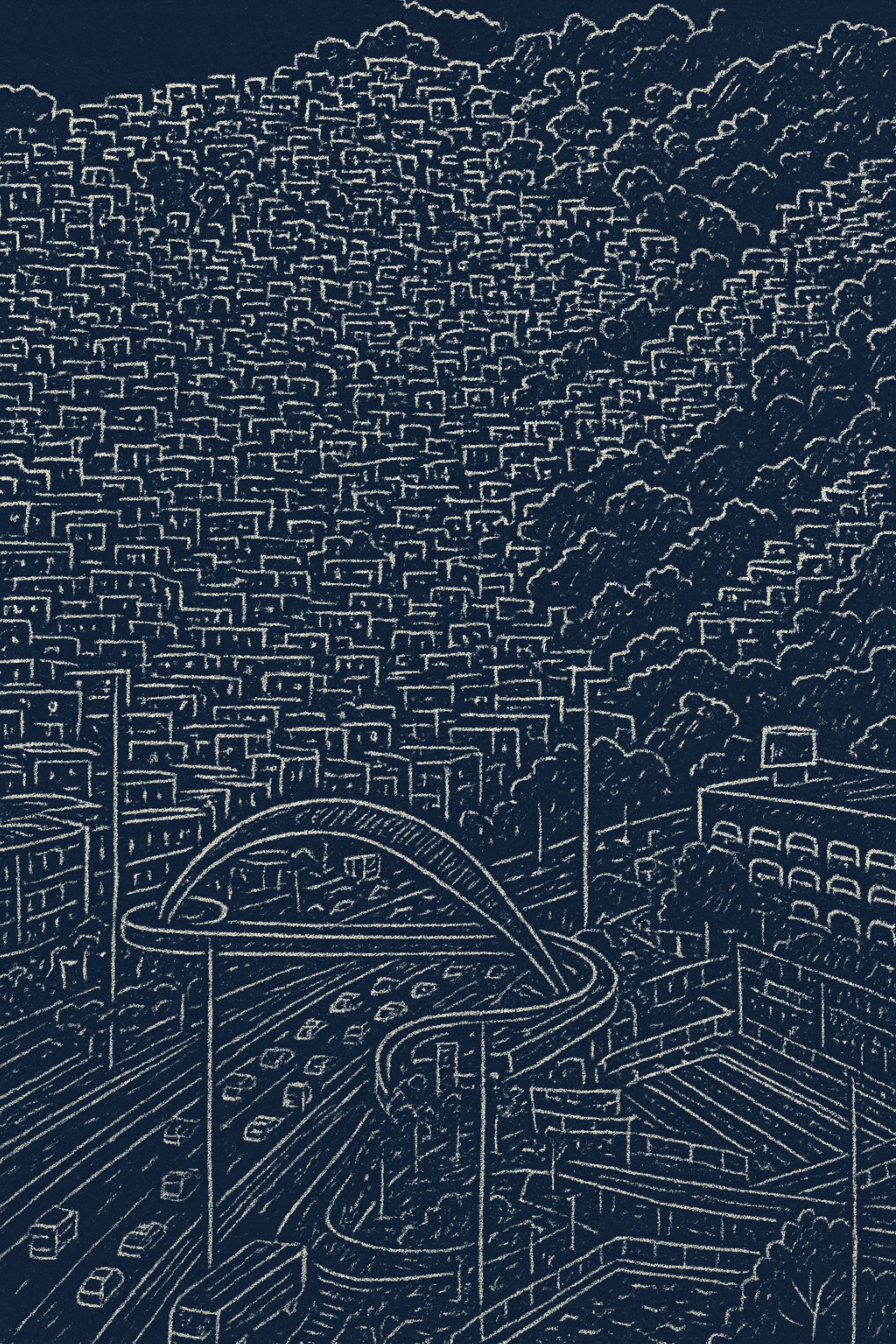
This article investigates how writers and filmmakers from the urban periphery—in the French banlieues and Brazilian favelas—address the issue of police violence. First, it analyzes how these artistic productions problematize the presence of the punitive State and give voice to lived experiences of residents in marginalized territories. Second, it examines the representations these intellectuals offer of social conflicts, which emerge from an internal perspective and often contrast with dominant interpretations disseminated by political and media discourse. Thus, the aim is to understand to what extent such works contribute to a deeper understanding of the reality experienced by peripheral residents. Finally, the article questions whether, beyond differences linked to distinct socio-cultural contexts, differences are also observed in the aesthetic choices and narrative strategies between French and Brazilian artists. By crossing these dimensions, the research proposes an innovative comparative dialogue on art, violence, and urban marginality in the Global South and Global North.
Article Details

Articles published in Brasiliana are licensed under a Creative Commons Attribution-NonCommercial-NoDerivs 3.0 Unported License.
When publishing open access, the author signs an author publishing agreement in which they retain copyright and give Brasiliana the right to publish the article. Our Open Access publications are distributed under the terms of the Creative Commons Attribution 4.0 International License, which permits unrestricted use, distribution, and reproduction in any medium, provided the original work is properly cited.
References
Corpus literário
Diallo, D. (2022). Deux secondes d’air qui brûle. Paris: Seuil.
Harchi, K. (2021). Comme nous existons. Arles: Actes Sud.
IAM, (1994). Le Feu, Delabel.
Ferréz. (2000). Capão Pecado. São Paulo: Labortexto Editorial.
Kassovitz, M. (1995). La Haine.
Lins, P. (1997). Cidade de Deus. São Paulo: Companhia das Letras.
Ly, L. (2018). Les Misérables.
Martins, G. (2018). O Sol na Cabeça. São Paulo: Companhia das Letras.
Martins, G. (2022). Via Ápia. São Paulo: Companhia das Letras.
Oliveira, R. (2015). A Número Um. Rio de Janeiro: Casa da Palavra.
Ouassak, F. (2025). Comme Ali. La Laune : Au Diable Vauvert.
NTM, (1996). Qu'est-ce qu'on attend, Sony Music Entertainment / Epic Records
Sané, I. (2008). Du plomb dans le crâne. Paris: Éditions Sarbacane.
Santaki, R. (2013). Flic ou caillera. Paris: Éditions du Masque.
Literatura secundária
Aftab, K. (2020). Mathieu Kassovitz on La Haine: “I made the movie because kids die”, BFI. https://www.bfi.org.uk/sight-and-sound/interviews/mathieu-kassovitz-la-haine-legacy [Acesso em: 6 setembro 2025].
Albertini, A., Cordier, S., Couvelaire, L., Mestre, A. & Pommiers, É. (2023). Quatre mois après les émeutes, le gouvernement dévoile des nouvelles mesures et affiche une image de fermeté. Le Monde, 26 octobre 2023 https://www.lemonde.fr/politique/article/2023/10/26/mesures-post-emeutes-le-gouvernement-affiche-une-image-de-fermete_6196672_823448.html [Acesso em: 6 setembro 2025]..
Amnesty International. (2009). Public Outrage: Police Officers above the Law in France. London: Amnesty International.
Amnesty International. (2017). Un droit, pas une menace: restrictions disproportionnées à la liberté de réunion pacifique en France. London: Amnesty International.
Amnesty International. (2020).a France: un usage excessif de la force lors des manifestations doit cesser. London: Amnesty International.
Amnesty International. (2020).b Policing the pandemic: Human rights violations in the enforcement of COVID-19 measures in Europe (France section). London: Amnesty International.
Bernstein, R. (2011). Racial Innocence: Performing American Childhood from Slavery to Civil Rights. New York: New York University Press.
Body-Gendrot, S. (2010). Police marginality, racial logics and discrimination in the banlieues of France, Ethnic and Racial Studies, 33:4, 656-674.
Cano, I., (2012). Os donos do morro: Uma avaliação exploratória do impacto das Unidades de Polícia Pacificadora (UPPs) no Rio de Janeiro. Rio de Janeiro: Fórum Brasileiro de Segurança Pública/Laboratório de Análise da Violência (Uerj).
Coutinho, E. F. (2025) Diálogos interculturais: ensaios de comparatismo latino-americano. São Paulo: Martins Fontes.
Cello, S. (2019). La littérature des banlieues : un engagement littéraire contemporain. Roma: Edizioni Aracne.
Costa, IF.(2005) Polícia e sociedade: gestão de segurança pública violência e controle social [online]. Salvador: EDUFBA, 244 p. http://books.scielo.org. [Acesso em: 6 setembro 2025].
Dikeç, M., (2017). Urban Rage: The Revolt of the Excluded. New Haven: Yale University Press.
Fassin, D. (2017). Punir. Paris : Seuil.
Goudaillier, J.-P. (2001). Comment tu tchatches ! Dictionnaire du français contemporain des cités. Paris: Maisonneuve et Larose.
Hargreaves, A.G., (2007). Multi-Ethnic France: Immigration, Politics, Culture and Society. 2nd ed. London: Routledge
Henning, K. (2021). The Rage of Innocence: How America Criminalizes Black Youth. New York: Pantheon Books.
Jobard, F. & de Maillard, J. (2020). Identity Checks as a Professional Repertoire. In: De Maillard, J. & Skogan, W. G. (eds.) Policing in France. Abingdon: Routledge, pp. 202–218.
Schollhammer, K. E. (2013). Cena do crime: violência e realismo no Brasil contemporâneo. Rio de Janeiro: José Olympio.
Kokoreff, M. (2021). Violences policières, généalogie d’une violence d’État. Paris : Textuel.
Mucchielli, L. & Le Goaziou, V. (dirs) (2006). Quand les banlieues brûlent... : Retour sur les émeutes de novembre 2005. Paris : La Découverte.
Oberti, M. & Préteceille, E. (dirs.), (2016), La ségrégation urbaine, Coll. « Repères, sociologie », Paris : La Découverte, 128 p., ISBN 978-270-71642-54.
Oliveira, T.R. & Jackson, J., (2025). Learning the binding nature of the law: Police violence, criminal offending and adolescent legal socialization. Journal of Developmental and Life-Course Criminology, [online] 2025, publicado em 31 julho 2025. Disponível em: https://doi.org/10.1007/s40865-025-00271-y [Acesso em: 6 setembro 2025].
Ouassak, F. (2020). La Puissance des mères. Pour un nouveau sujet révolutionnaire. Paris : La Découverte.
Ouassak, F. (2023). Pour une écologie pirate : Et nous serons libres. Paris : La Découverte.
Machado da Silva, L.A., (2014). Vida sob cerco: violência e rotina nas favelas do Rio de Janeiro. Rio de Janeiro: Nova Fronteira/Faperj.
Pankaj C. Patel, Jack Richter & Marcus Wolfe (2025) Examining the impact of pacification on informal entrepreneurs in Brazilian favelas, Applied Economics, 57:37, 5732-5747, DOI: 10.1080/00036846.2024.2366447
Perlman, J., (2010). Favela: Four Decades of Living on the Edge in Rio de Janeiro. Oxford: Oxford University Press.
Rigouste, M. (2012). La Domination policière : une violence industrielle. Paris : La Fabrique.
Roux, G., Purenne, A. & Talpin, J. 2023. "Expérience des discriminations et citoyenneté : Enquête auprès d’habitants de quartiers populaires". Appartenances & Altérités, 3, pp. – [page non précisée], https://doi.org/10.4000/alterites.486 [Acesso em: 6 setembro 2025].
Salem, T., (2024). Policing the Favelas of Rio de Janeiro: Cosmologies of War and The Far-Right. Palgrave Macmillan (Palgrave’s Critical Policing Studies). DOI: https://doi.org/10.1007/978-3-031-49027-9
Ventura, Z., (1994). Cidade partida. São Paulo: Companhia das Letras.
Wacquant, L., (2008). Urban Outcasts: A Comparative Sociology of Advanced Marginality. Cambridge: Polity Press.
Ward, G. (2012). The Black Child-Savers: Racial Democracy and Juvenile Justice. Chicago, IL: University of Chicago Press.
Zaluar, A. (1985). A Máquina e a Revolta: as Organizações Populares e o Significado da Pobreza. São Paulo: Brasiliense.
Zaluar, A. (1994). Condomínio do Diabo. Rio de Janeiro: Revan.