
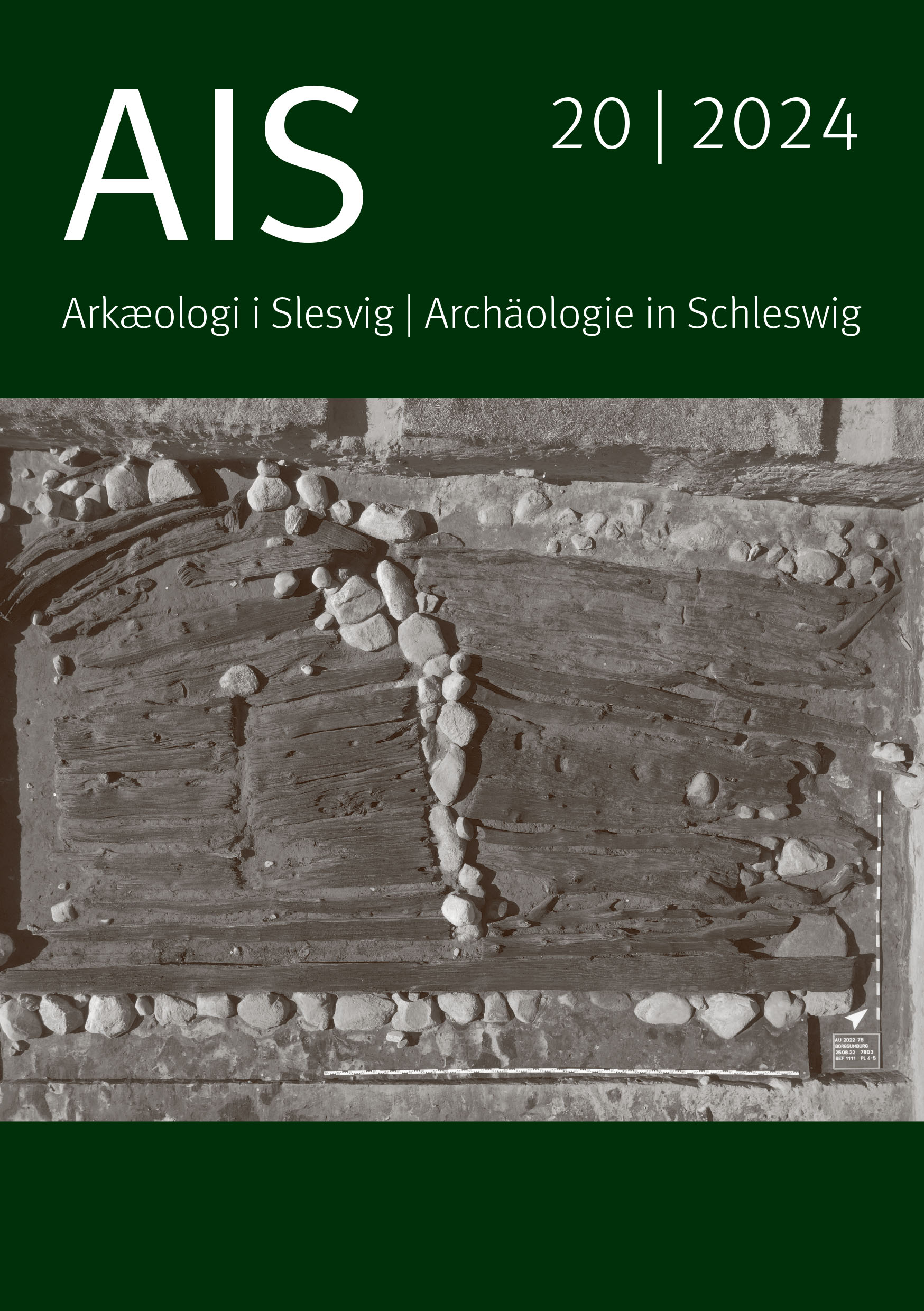
Burg Brink: Bischofshof des 13. Jahrhunderts und spätmittelalterliche Burg.
Resumé
The Brink castle site at Ballum-Østerende,
Tønder Municipality, is generally characterised
by poor preservation conditions.
Compared to the early excavations between
1999 and 2002, the investigations
between 2017 and 2023 uncovered heavily
impacted and ploughed-over contexts.
Detector finds and two postholes indicate
a settlement here from the Viking Age,
particularly in the low-lying nortwestern
area which was covered by thick culture
layers. These protective fill layers were
probably applied until the 13th century,
in the lead-up to the construction of a
large hall by the bishop of Ribe. The culture
layers significantly altered the original
topography, a rather pronounced
hillside*(Danish »brink«), which gave the
castle the name that has been preserved
in the adjacent »Brink Møllegård« to this
day. The three-zone masonry building
was erected on a sand foundation and
can be identified as a lordly palatium. In
the 14th century, the complex –likely initially
only a lightly fortified bishop’s residence
– was massively reinforced making
it one of the largest castles in Denmark. In
its northern outer bailey, the castle’s economic
area comprised an intensively used
hearth and a brewery.
In the mid 16th century, Brink was
abandoned. The excavation results show
intensive dismantling of the stone buildings,
especially of the main castle. The
moats were rapidly filled in–and the once
magnificent complex went into oblivion.
Publiceret
Citation/Eksport
Nummer
Sektion
Licens
Copyright (c) 2026 Tidsskrift og forfatter

Dette værk er under følgende licens Creative Commons Navngivelse – Ikke-kommerciel – Del på samme vilkår (ShareAlike) (by-nc-sa).
Tidsskriftet er ikke ansvarlig for indhentelse af tilladelse fra tredjepart i forhold til brug af illustrationer m.m, ved eventuel genudgivelse af materialet.
Forfatteren er alene ansvarlig for at indhente samtlige rettigheder til publikation af kortmateriale, billeder, grafisk materiale etc.
Forfattere, der publicerer deres værker via dette tidsskrift, accepterer følgende vilkår:
OPEN ACCESS: Forfatteren bevarer ophavsret og giver tidsskriftet første ret til publicering.


