
Keywords
Gaia Satellite
Brorfelde Observatory
How to Cite
Abstract
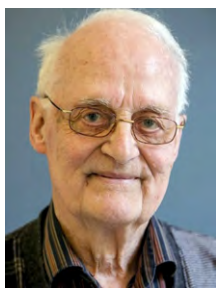
In a personal and professionally rich narrative, Erik Høg recounts his lifelong work in astrometry – from Brorfelde to the Gaia satellite. The article is an exceptional documentation of how Danish astronomy helped revolutionize the measurement of stars' positions, movements, and distances. The reader is guided through the development of meridian circles, from manual measurements to automated systems and photon counting, with a particular focus on the innovations at Brorfelde. We hear about the collaboration with Peter Naur, the expedition to Australia with the meridian circle from Hamburg-Bergedorf, and how Høg’s ideas about photon-based astrometry led to ESA’s Hipparcos and Gaia. The article concludes with the vision of GaiaNIR – a future successor with infrared sensitivity. This is not just a historical overview, but a deep insight into how precision and technology have driven astronomy into the modern era.
References
[1] E. Høg, S. Laustsen og J. Otzen Petersen (2024) "Julie Vinter Hansen Event". https://zenodo.org/records/13744520
[2] E. Høg (2010) "En landmåler i himlen," Kvant, bind 21, nr. 3, side 3-8.
[3] E. Høg (2024) "A review of 70 years with astrometry". Research Memoir. Invited review for Astrophysics and Space Science, 32 sider, kun online: https://rdcu.be/dzp2o
https://doi.org/10.1007/s10509-024-04285-8
[4] E. Høg (2022) "Om dansk astrometri efter Tycho Brahe", Kvant, bind 22, nr. 2, side 32-35.
[5] J.K.L. Bouchet og M.B. Olsen (2014) "Brorfelde Observatorium åbner som oplevelsescenter," Kvant, bind 25, nr. 4, side 14-17.
[6] E. Høg og C. Fabricius (1988) "Atmospheric and internal refraction in meridian Observations". Astron. Astrophys., bind 196, side 301-312.
[7] T. Bjørnvig og K. Tybjerg (2010) "Dansk astrometri fra 1950 til i dag: Metoder, mål og midler". Baseret på talrige interviews. https://zenodo.org/records/14252551
Counting from volume 37 (2026 -), articles published are licensed under Creative Commons Attribution-NonCommercial CC BY-NC 4.0.
Articles in volume 1-36 (1990 - 2025) are not licensed under Creative Commons. In these volumes, all rights are reserved to the authors of the articles respectively.