
Keywords
Palæoklima
Exoplaneter
Kuldioxidfangst
Superhydrofobe overflader
Brint
Pulsarer
How to Cite
Abstract
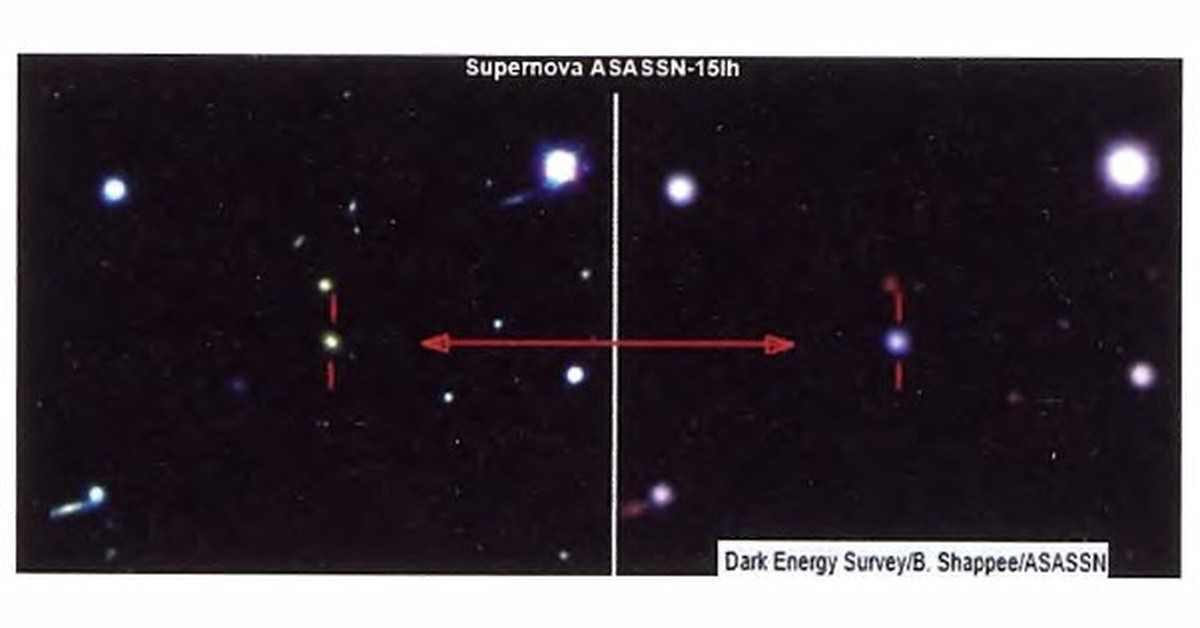
Supernovaen ASASSN-15lh er den mest lysstærke stjerneeksplosion, der nogensinde er set – 570 milliarder gange Solens lysstyrke. Nyhederne fortæller også om spor af store floder i Sahara, en planet set under dannelse, et porøst materiale, der suger kuldioxid til sig som en svamp, vanddråber, der hopper højere og højere, og den første gammapulsar fundet uden for Mælkevejen.
References
Dong, S. et al.: ASASSN-15lh: A highly super-luminous supernova. Science 351, 257–260 (2016). https://doi.org/10.1126/science.aac9613
Skonieczny, C. et al.: African humid periods triggered the reactivation of a large river system in Western Sahara. Nature Communications 6, 8751 (2015). https://doi.org/10.1038/ncomms9751
Sallum, S. et al.: Accreting protoplanets in the LkCa 15 transition disk. Nature 527, 342–344 (2015). https://doi.org/10.1038/nature15761
Nandi, S. et al.: A single-ligand ultra-microporous MOF for precombustion CO2 capture and hydrogen purification. Science Advances 1, nr. 11 (2015). https://doi.org/10.1126/sciadv.1500421
Schutzius, T.M. et al.: Spontaneous droplet trampolining on rigid superhydrophobic surfaces. Nature 527, 82–85 (2015). https://doi.org/10.1038/nature15738
Resasco, J. et al.: TiO2/BiVO4 Nanowire Heterostructure Photoanodes Based on Type II Band Alignment. ACS Central Science 2, 80–88 (2016). https://doi.org/10.1021/acscentsci.5b00402
The Fermi LAT Collaboration: An extremely bright gamma-ray pulsar in the Large Magellanic Cloud. Science 350, 801–805 (2015). https://doi.org/10.1126/science.aac7400
Counting from volume 37 (2026 -), articles published are licensed under Creative Commons Attribution-NonCommercial CC BY-NC 4.0.
Articles in volume 1-36 (1990 - 2025) are not licensed under Creative Commons. In these volumes, all rights are reserved to the authors of the articles respectively.