
How the Aspis Locked Citizen-Soldiers in and Others Out
An Essay
Abstract
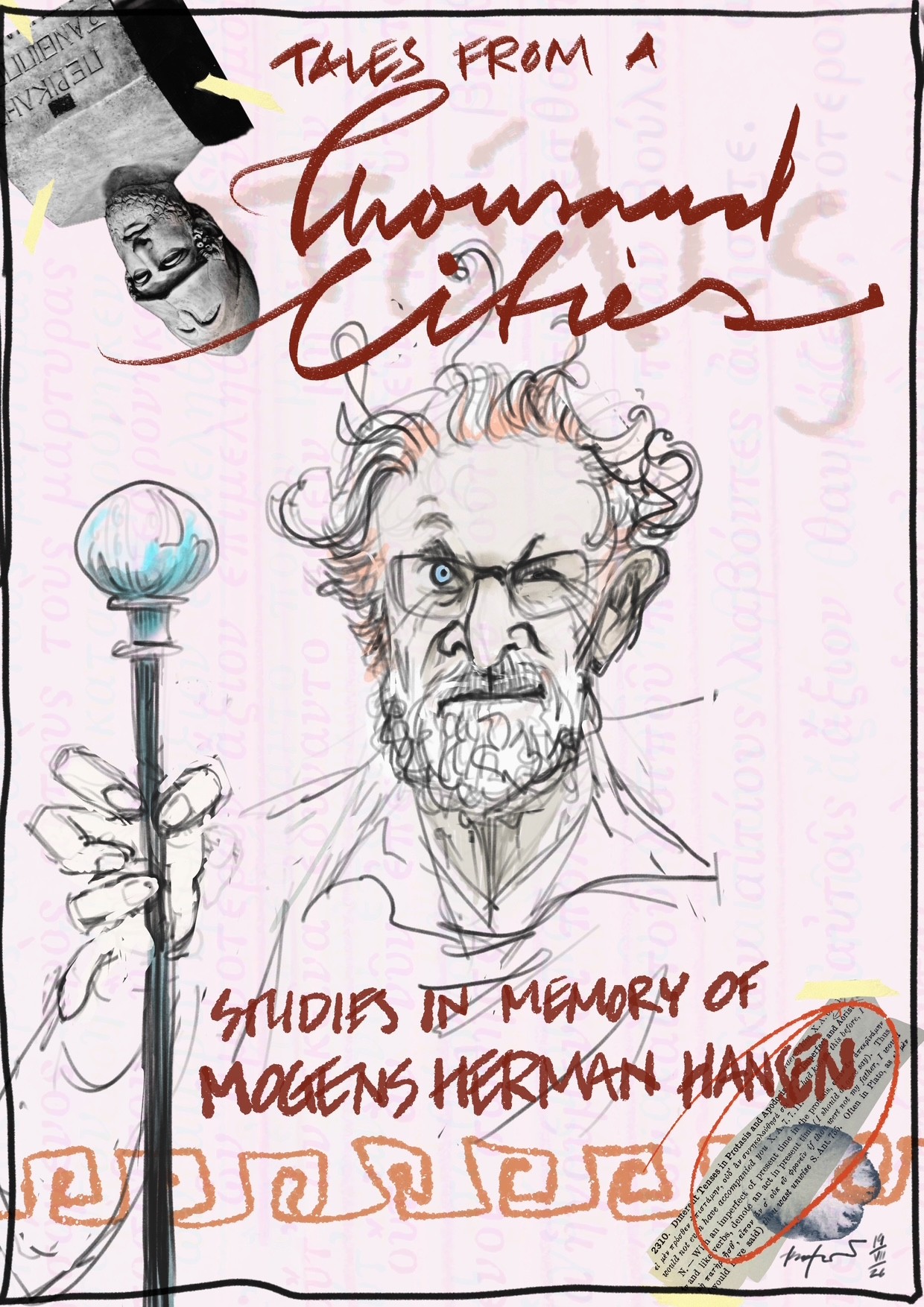
This essay builds on two papers by Mogens Herman Hansen (2008; 2010), which both used mechanisms of exclusion, particularly regarding women and foreigners, to illuminate the nature of civic belonging in the polis. Expanding this approach, the essay asks why the Greeks, and especially, it seems, the Athenians, developed unusually formalised practices of inclusion and exclusion. The author’s interest arises from a comparison between modern Denmark and Switzerland, where women obtained enfranchisement fifty years apart. For the author, this gap shows that the ideal of the citizensoldier tends to exclude the political participation of other groups. Hansen himself used the Swiss Landsgemeinden as the only historical parallel to Athenian democracy, but he did not address their exclusionary nature. I will examine how solidarity and citizenship were constructed through boundary-making, analysing the symbolic, material, and institutional mechanisms by which Athenian civic identity was created and maintained.
Downloads
Published
How to Cite
Issue
Section
License

This work is licensed under a Creative Commons Attribution 3.0 Unported License.
Authors who publish with this journal agree to the following terms:
- Authors retain copyright and grant the journal right of first publication with the work simultaneously licensed under a Creative Commons Attribution License that allows others to share the work with an acknowledgement of the work's authorship and initial publication in this journal.
- Authors are able to enter into separate, additional contractual arrangements for the non-exclusive distribution of the journal's published version of the work (e.g., post it to an institutional repository or publish it in a book), with an acknowledgement of its initial publication in this journal.
- Authors are permitted and encouraged to post their work online (e.g., in institutional repositories or on their website) prior to and during the submission process, as it can lead to productive exchanges, as well as earlier and greater citation of published work (see The Effect of Open Access).


