
Aristotle and Cyprus
Resumé
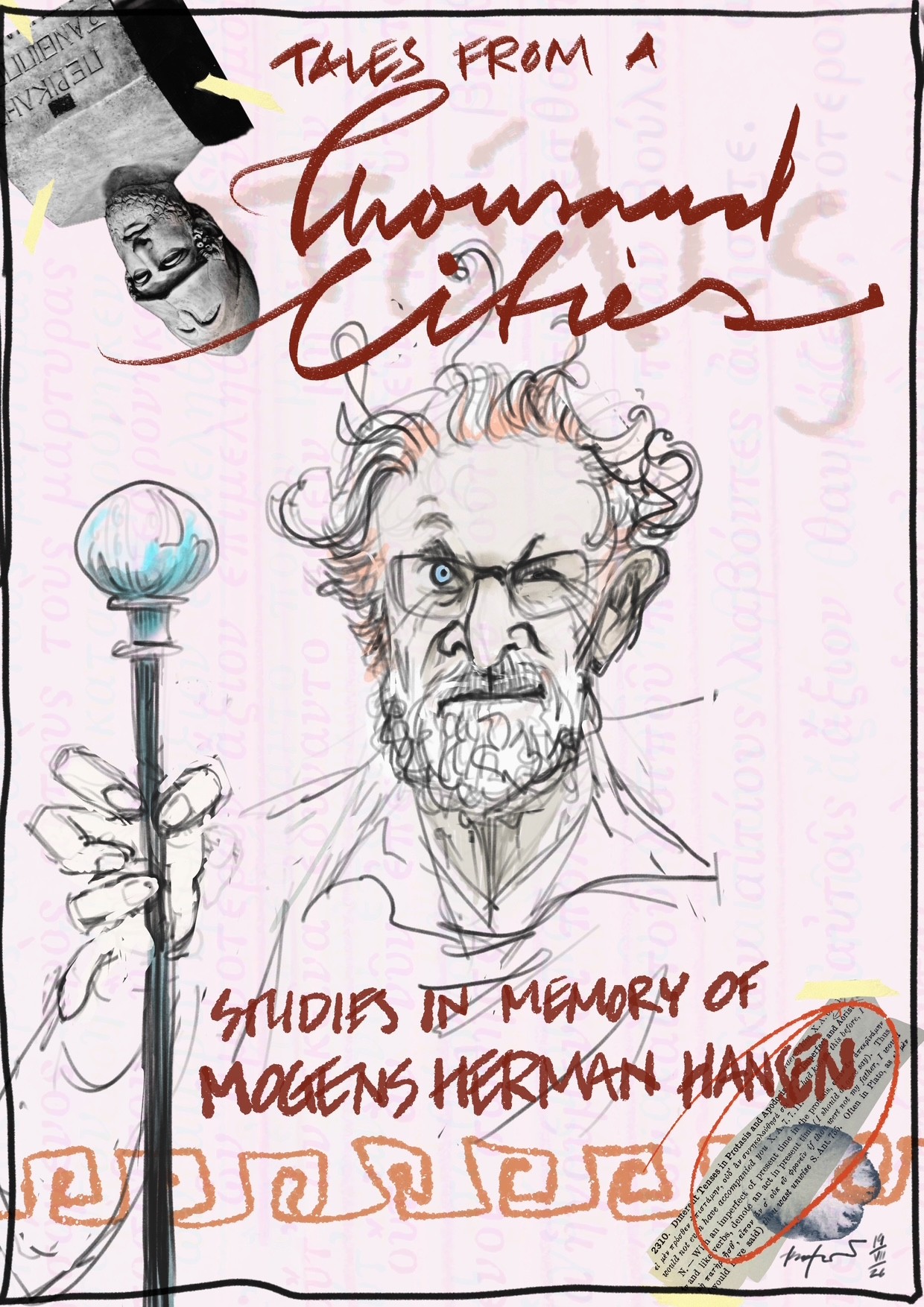
(1) I begin with a tribute to Mogens Herman Hansen, most of which seeks to clarify his opinion about when the polis came to an end and, more important, when he believed it did not. It will refer mainly but not only to his Introduction to the Copenhagen Inventory. (2) This section offers, against recent criticisms, a defence of the Inventory’s treatment of Cyprus in the chapter by F.G. Maier. The section concludes with remarks about the poet Lykophron’s important Cypriot material, and argues for its relevance to the modern debate about the nature of the Cypriot poleis. (3) This short section introduces the main part of the article. Plato’s alleged attempts to make philosophers out of Sicilian rulers have been much discussed, and his pupil Aristotle was Alexander’s teacher. But the young Aristotle had less famous educational contacts with a prince of Cyprus. (4) Cyprus as an entity does not feature in Aristotle’s Politics; there is only a melodramatic allusion to the murder of the Cypriot king Evagoras I (of Salamis). But Aristotle or a member of his school wrote a – now almost totally mostly lost – Constitution of the Cypriots. One of the three probable fragments concerns the family of Nikokles king of Paphos. (5) One of Aristotle’s earliest works, 353 BCE (?), was the – Isokratean rather than Platonic – Protreptikos or Exhortation (to philosophy), now fragmentary, but influential in antiquity. It was addressed to ‘Themison prince of Cypriots’, who is otherwise unknown, as is his home city. This section speculates that Philip II of Macedon knew of and remembered this relationship later, when he invited Aristotle to teach his son Alexander, born in 356. (6) Aristotle’s equally early and fragmentary Eudemos or On the Soul (late 350s?) takes its name from a Cypriot philosopher-friend of Dion, who with other named philosophers had died fighting for Dion at Syracuse in 353 (Plut. Dio 22.5; the death is narrated proleptically). A dream-story in Cicero (Div. 1.53) provides another link with Philip II’s Macedon (cf. §5 above): Eudemos was on his way there in 358.
Downloads
Publiceret
Citation/Eksport
Nummer
Sektion
Licens

Dette arbejde er licenseret under en Creative Commons Attribution 3.0 Unported License.
Authors who publish with this journal agree to the following terms:
- Authors retain copyright and grant the journal right of first publication with the work simultaneously licensed under a Creative Commons Attribution License that allows others to share the work with an acknowledgement of the work's authorship and initial publication in this journal.
- Authors are able to enter into separate, additional contractual arrangements for the non-exclusive distribution of the journal's published version of the work (e.g., post it to an institutional repository or publish it in a book), with an acknowledgement of its initial publication in this journal.
- Authors are permitted and encouraged to post their work online (e.g., in institutional repositories or on their website) prior to and during the submission process, as it can lead to productive exchanges, as well as earlier and greater citation of published work (see The Effect of Open Access).


