
Detecting Invective in Herodotos’s Histories
Resumé
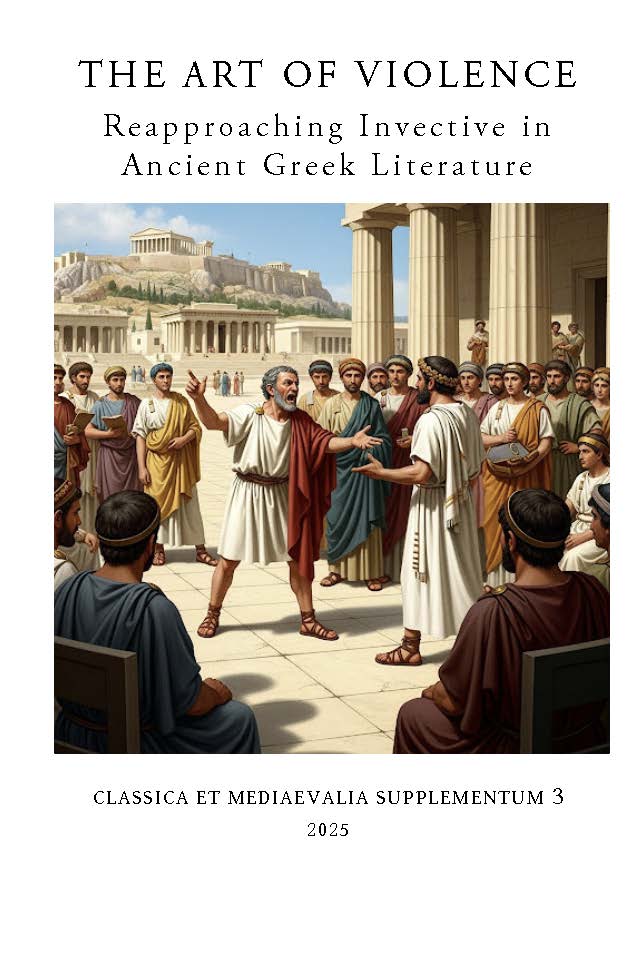
Invective is rather unwieldy and elastic for analysis. Greek and Roman insult poetry and oratory constitute recognizable invective – extended personal attack. Herodotos first exhibits it in prose. His invectives, relatively primitive, exist in two forms: character speech and author text. The historian presents an historical person denigrating an adversary and his position for an adjudicating presider or presiding body (triangulation). For example, the debate between Demaratos and Achaimenes after Thermopylai. Otherwise, the historian presents his own views that contravene previous traditions, contemporary (oral) authorities, or specific publics. He thus critiques Hekataios, theorist-geographers, Ionians’ views of Lade, Alkmaionid treason at Marathon, and most post-war Hellenes refuting Athenian liberationist claims. Invective essentials in poetry and contemporary oratory influenced Herodotos’s composition, since he resided in Athens, central for developments in Aegean speech-making. Herodotos features invective situations: political status and rivalrous decision-making (characters) and defects of other historians and publics (author text).
Downloads
Publiceret
Citation/Eksport
Nummer
Sektion
Licens

Dette arbejde er licenseret under en Creative Commons Attribution 3.0 Unported License.
Authors who publish with this journal agree to the following terms:
- Authors retain copyright and grant the journal right of first publication with the work simultaneously licensed under a Creative Commons Attribution License that allows others to share the work with an acknowledgement of the work's authorship and initial publication in this journal.
- Authors are able to enter into separate, additional contractual arrangements for the non-exclusive distribution of the journal's published version of the work (e.g., post it to an institutional repository or publish it in a book), with an acknowledgement of its initial publication in this journal.
- Authors are permitted and encouraged to post their work online (e.g., in institutional repositories or on their website) prior to and during the submission process, as it can lead to productive exchanges, as well as earlier and greater citation of published work (see The Effect of Open Access).


