
Classical Archaeology and Political History: Scope for Rapprochement?’
Abstract
This article assesses the legacy of the Copenhagen Polis Centre and its influence on the study of Greek social and political organization. The Inventory of Archaic and Classical Poleis transformed the field through its systematic mapping of poleis, horizontal
networks, and forms of dependency. Yet its temporal limits and text-centred approach constrained the integration of archaeological evidence into broader narratives of state formation. Building on the CPC’s work and subsequent insights into federalism and regional
diversity, I identify five themes – trust, warfare, economic processes, population, and the nature of koina and komai – where archaeology has the potential to reshape understanding of long-term trajectories. Using examples from northwestern Greece, I argue
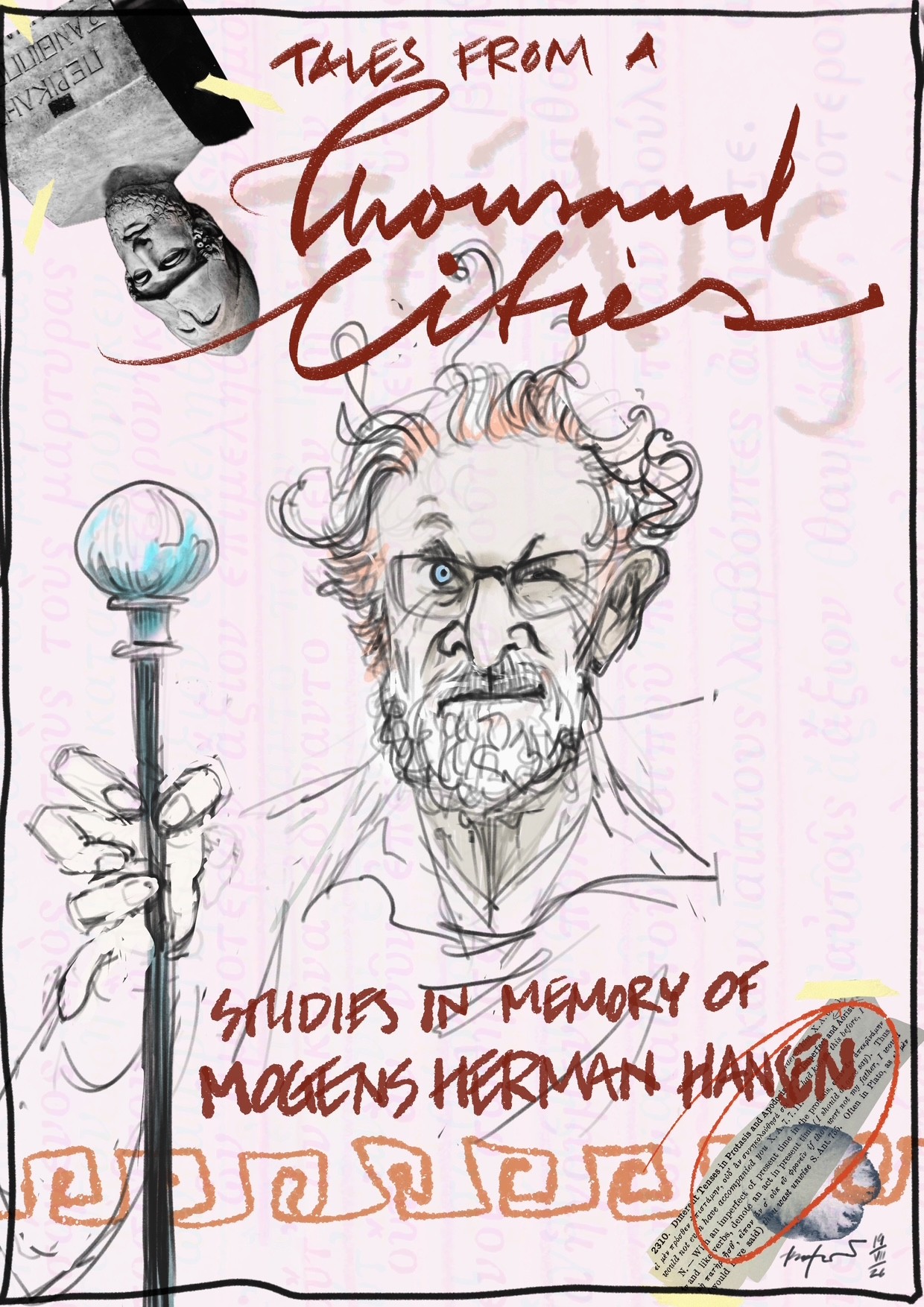
for methodologically ambitious, multi-scalar research capable of addressing structural questions about governance, identity, and political integration. A renewed, theoretically grounded collaboration between archaeology and history that mirrors Mogens
Hansen’s comparative vision would expand the possibilities for writing political history through material culture.
Downloads
Published
How to Cite
Issue
Section
License

This work is licensed under a Creative Commons Attribution 3.0 Unported License.
Authors who publish with this journal agree to the following terms:
- Authors retain copyright and grant the journal right of first publication with the work simultaneously licensed under a Creative Commons Attribution License that allows others to share the work with an acknowledgement of the work's authorship and initial publication in this journal.
- Authors are able to enter into separate, additional contractual arrangements for the non-exclusive distribution of the journal's published version of the work (e.g., post it to an institutional repository or publish it in a book), with an acknowledgement of its initial publication in this journal.
- Authors are permitted and encouraged to post their work online (e.g., in institutional repositories or on their website) prior to and during the submission process, as it can lead to productive exchanges, as well as earlier and greater citation of published work (see The Effect of Open Access).


