
Pennies for the King's Towns
Ribe and Haithabu-pennies from 9th Century
DOI:
https://doi.org/10.7146/bmg.v37i1.159728Nøgleord:
udmøntning, penning, numismatik, vikingetidResumé
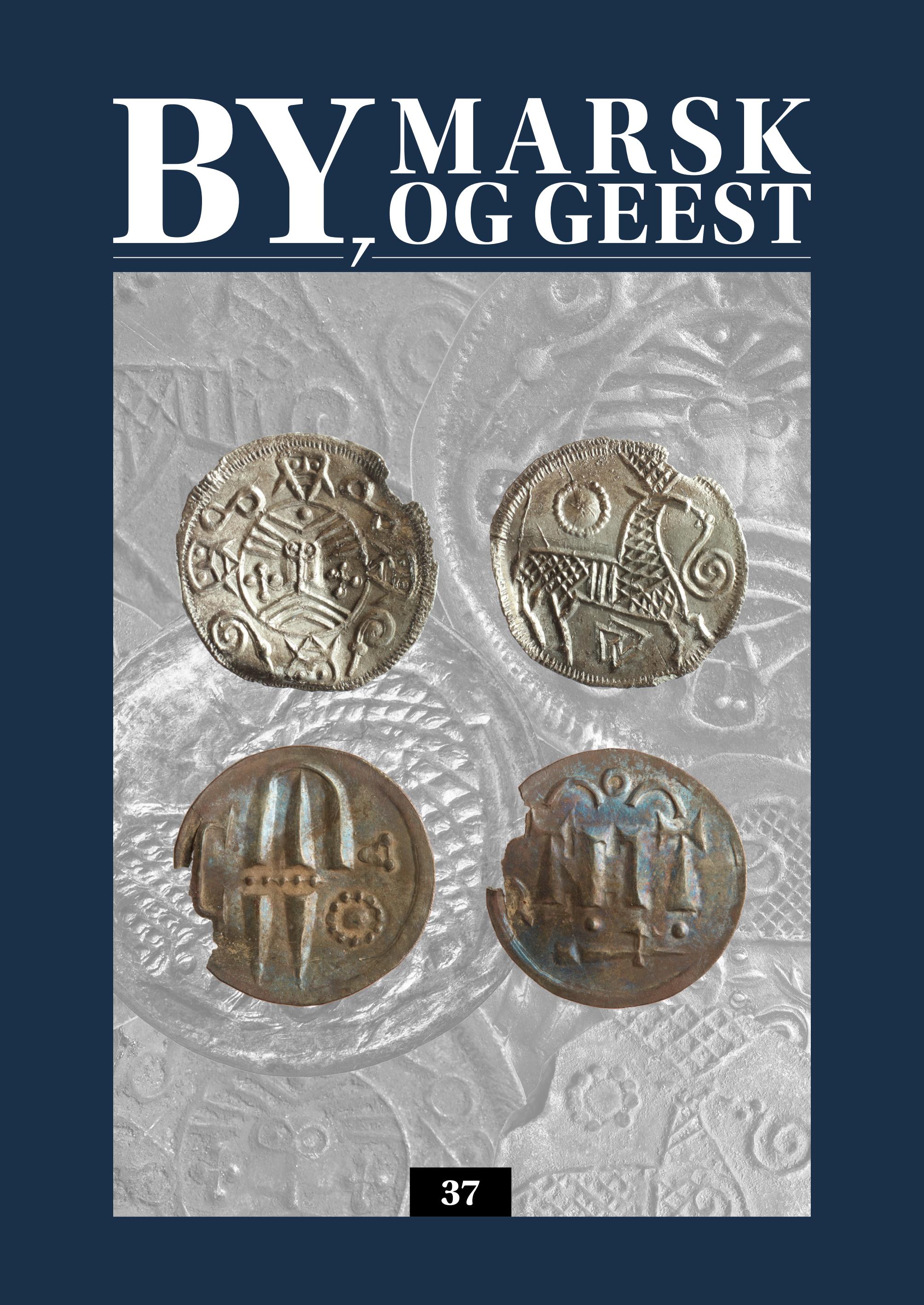
This paper presents 540 pennies from Brita Malmer's combination groups 3-6 (KG 3-KG 6). The analysis divides the coin types into pennies from Ribe and Haithabu, the most prominent towns in Viking Age Denmark. The coins are divided into 10 main types, and a
detailed review of types and varieties is presented, which are dated based on numismatic considerations, input from treasure finds and archaeological excavations. The period of minting is extended from c. 825-60 to cover the remaining part of the 9th century and, for
one of the coin types, extended further to cover a period well into the 10th century. The coins are divided according to their use: as payment or in a demonetized form as coin-pendants. Based on the use of the coins as either payment or converted into coin-pendants and in combination with the geographical distribution, it is argued that there were two economic zones, one around Ribe and one around Hedeby in the 9th century where money was used as a managed local currency, so that pennies from the two towns largely excluded each other. In connection with the earliest penny from Ribe (c. 820/30-c. 850), one of the main types presented is a halfpenny – a significant innovation in Danish monetary history. Finally, the coinage is linked to a strong royal presence that had both the necessary power and control, as well as the organizational skills to implement and maintain coinage over quite long
periods of time, and to a certain extent to enforce managed local currencies.
Downloads
Publiceret
Nummer
Sektion
Licens
Forfatter.
Fra 2022 CC-BY-4.0
Fra før 2022 er copyright forfatteren
