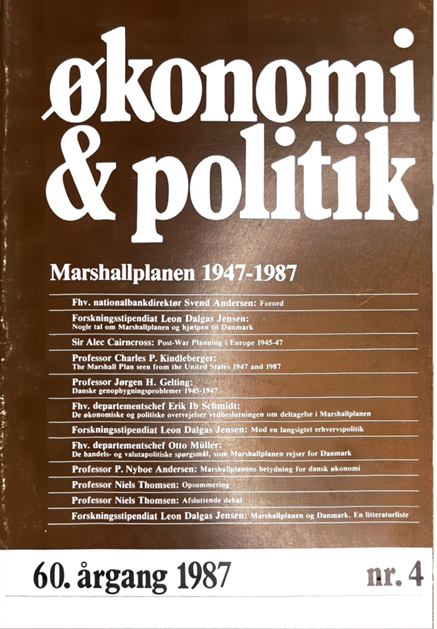
The Marshall Plan seen from the United States 1947 and 1987
Resumé
It is universally agreed that the U.S. performance after World War I had not been distinguished. The failure of President Wilson to fashion the Versailles Treaty along the lines of the Fourteen Points, the American rejection of the treaty and of the League of Nations, the country's insistence on collecting war debts from its allies, and the collapse of the world economy into deep and prolonged depression in the 1930s, with a breakdown of the world trade and payments mechanism, persuaded most Americans that a more farsighted approach was needed after World War II.
Downloads
Publiceret
Citation/Eksport
Nummer
Sektion
Licens
Tidsskriftet Økonomi & Politik er et open access tidsskrift, og alle artikler udgivet af Økonomi & Politik er licenseret under en Creative Commons Navngivelse-IkkeKommerciel-IngenBearbejdelse 4.0 International Licens, CC BY-NC-ND.
