Bryggeristrejken 1985
Faglig aktivisme, ressourcemobilisering og lederskab
DOI:
https://doi.org/10.7146/ah.vi1.155916Resumé
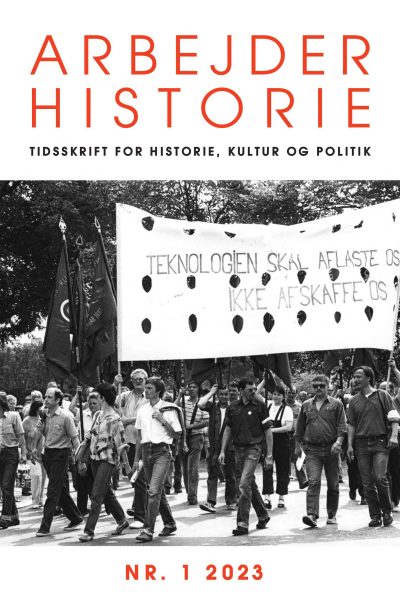
Conflicts of interest in the labour market are predominantly handled by institutionalized negotiations between the labor market parties, collective agreements, labour law courts, tripartite negotiations and sometimes state intervention, in Denmark called the Danish or nordic model. But that is not the whole story. trade union activism is performed in the surroundings of the formal system. in order to examine this phenomenon more closely, the brewery workers’ 8-week non-contractual strike in 1985 has been chosen as a historical case. Based on both interviews with involved activists as well as printed and unprinted material from the strike’s actors, the article takes a closer look at the importance of resource mobilization. Concretely, the issue is dealt with through an introduction to the grouping The socialist Brewery Workers, to which several of the interviewees were affiliated in the 1970s, and where a new left-oppositional, ideologically driven rationale and network was established. next, the life stories of two of the strike’s most leading figures in the strike are examined, and through them an insight is given into the different types of resources that the activists contributed to the conflict. Finally, the mobilization of resources is further dealt with in a section on strike leadership, where the concept of ‘bridge leaders’ is introduced, and in a section on the crucial importance of collecting money for strike support. An important lesson is that activists can be both in opposition to the established unions and dependent on them.
Downloads
Publiceret
Citation/Eksport
Nummer
Sektion
Licens
Copyright (c) 2023 SFAH og forfatterne

Dette værk er under følgende licens Creative Commons Navngivelse – Ikke-kommerciel – Ingen Bearbejdede Værker (by-nc-nd).
