
Conservation status of the world’s swan populations, Cygnus sp. and Coscoroba sp.: a review of current trends and gaps in knowledge
Article Sidebar
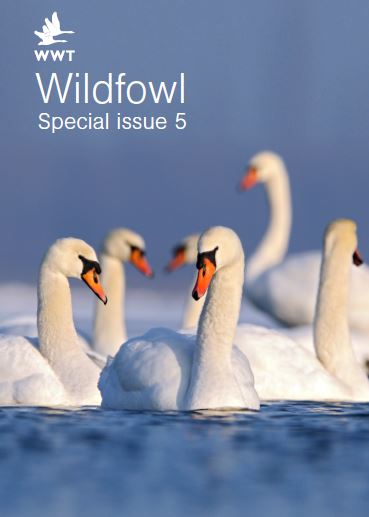
Main Article Content
Abstract
Recent estimates of the world’s swan Cygnus sp. populations indicate that there are currently between 1.5–1.6 million birds in 8 species, including the Coscoroba Swan Coscoroba coscoroba as an honorary swan. Monitoring programmes in Europe and North America indicate that most populations increased following the introduction of national and international legislation to protect the species during the early- to mid-20th century. A switch from feeding primarily on aquatic vegetation to foraging on farmland (especially high-energy arable crops) in winter during the second half of the 20th century, is also considered a contributing factor. Trumpeter Swans Cygnus buccinator famously increased from just 69 individuals known to exist in 1935 (although small numbers were missed) to c. 76,000 at the present time, and most of the northern hemisphere swan populations have continued to show increasing/stable trends over the last 20 years. The exception to this pattern is a decline since 1995 in the Northwest European Bewick’s Swan population, following an increase in its population size during the 1970s–1980s, which is now being addressed through implementation of an International Single Species Action Plan. A proposal to change enforcement regulations of the Migratory Bird Treaty Act in the United States is also of concern, as potentially undermining protection for Trumpeter Swans in North America, illustrating the importance of politics and legislation as well as on-the-ground measures for species conservation. Elsewhere, less is known about the trends and conservation status for swans in central and eastern Asia, though count and research programmes introduced in China, added to those underway in Japan and Korea, have recently greatly enhanced our knowledge of swan populations on the East Asian flyway. Trends for the Black Swan Cygnus atratus in Australia and for the Black-necked Swan Cygnus melancoryphus in South America are also poorly known, because of the large numbers involved for the former and a lack of coordinated counts across difficult terrain for the latter. These southern hemisphere species are considered vulnerable to water resource developments (i.e. where diversion of water is shrinking wetlands), and to droughts associated with El Nino events and climate change. More extensive monitoring is therefore required to determine whether swan populations and species are stable, fluctuating or in decline.
Article Details
Articles in Wildfowl volumes 1-74 and in Wildfowl Special Issues 1-7 are not licensed under Creative Commons. In these volumes, all rights are reserved to the authors of the articles respectively.
The Wildfowl & Wetlands Trust (which published the journal from 1948–2020 inclusive) retains a royalty-free license in perpetuity to access and use pre-2021 issues for the purposes of research, which may involve sharing with research partners from time to time.
The copyright for this paper belongs to the Author(s). Papers published in Wildfowl 75 (in 2025) and subsequent issues are licensed under a Creative Commons Attribution-NonCommercial-ShareAlike 4.0 International License.
In the articles published in these volumes, all rights are reserved to the authors of the articles respectively. This implies that readers can download, read, and link to the articles, but they cannot republish the articles. Authors can upload their articles into an institutional repository.