
Spring migration stopovers of swans Cygnus sp. in the Russian part of the Gulf of Finland
Article Sidebar
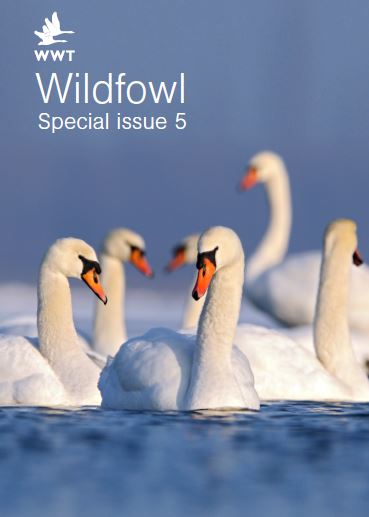
Main Article Content
Abstract
During spring migration each year swans were counted every 5 days at two of the most important stopover sites for these species in the eastern part of the Gulf of Finland near St Petersburg, Russia. Swans were counted on the Kurgalsky Peninsula in 2005–2017 and on the northern coast of the Neva Bay in 2009–2017. The maximum number of swans recorded on the Kurgalsky Peninsula each year during the study varied widely, with Bewick’s Swan Cygnus columbianus bewickii numbers ranging from 43–1,310 individuals and Whooper Swans C. cygnus varying from 35–747 individuals, whilst Mute Swan C. olor counts ranged from 68–394 individuals. The seasonal maximum number of swans on the northern coast of the Neva Bay in 2009–2018 also varied markedly, as Bewick’s Swan counts varied from 35–460 birds and Whooper Swan counts ranged from 5–65 individuals, whilst the number of Mute Swans did not exceed seven individuals. In 2018, counts were carried out at almost all known stopover sites for migratory swans along the coast of the Gulf of Finland. Most were used by swans in 2018, but swan abundance was low compared to the published data from previous decades, with maximum species-specific counts in 2018 of 68 Mute Swans, 86 Whooper Swans and 103 Bewick’s Swans. On comparing our data with previous studies, we consider that the number of swans in the Russian part of the Gulf of Finland has decreased since the 20th century, with the large stopovers of ≥ 1,000 swans having largely disappeared. The most likely cause of the decline in numbers, recorded both for Bewick’s Swans and for Whooper Swans, is the industrial development of the region. Construction work on the coast in the areas adjacent to the swan migration sites can have a negative impact on birds, primarily due to the reclamation of the wetland habitat and increased water turbidity.
Article Details
Articles in Wildfowl volumes 1-74 and in Wildfowl Special Issues 1-7 are not licensed under Creative Commons. In these volumes, all rights are reserved to the authors of the articles respectively.
The Wildfowl & Wetlands Trust (which published the journal from 1948–2020 inclusive) retains a royalty-free license in perpetuity to access and use pre-2021 issues for the purposes of research, which may involve sharing with research partners from time to time.
The copyright for this paper belongs to the Author(s). Papers published in Wildfowl 75 (in 2025) and subsequent issues are licensed under a Creative Commons Attribution-NonCommercial-ShareAlike 4.0 International License.
In the articles published in these volumes, all rights are reserved to the authors of the articles respectively. This implies that readers can download, read, and link to the articles, but they cannot republish the articles. Authors can upload their articles into an institutional repository.