
Temporal changes in the sex ratio of the Common Pochard Aythya ferina compared to four other duck species at Martin Mere, Lancashire, UK
Article Sidebar
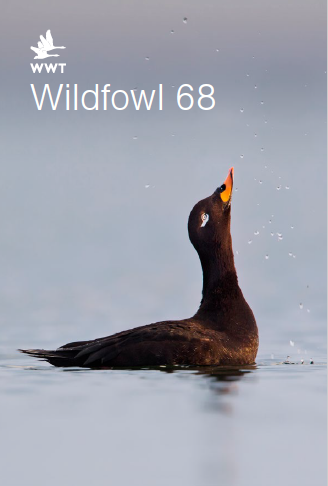
Main Article Content
Abstract
Duck populations tend to have male-biased adult sex ratios (ASRs). Changes in ASR reflect species demographic rates; increasingly male-biased populations are at risk of decline when the bias results from falling female survival. European and North African Common Pochard Aythya ferina numbers have declined since the 1990s and show increasing male bias, based on samples from two discrete points in time. However, lack of sex ratio (SR) data for common duck species inhibits assessing the pattern of change in the intervening period. Here, we describe changes in annual SR during winters 1991/92–2005/06 for five duck species (Common Pochard, Gadwall Mareca strepera, Northern Pintail Anas acuta, Northern Shoveler Spatula clypeata and Tufted Duck Aythya fuligula) at Martin Mere, Lancashire, UK. Pochard, Pintail, Tufted Duck and Shoveler showed significantly male-biased SRs, with the male bias increasing in Pochard and Shoveler, exhibiting a weak decrease in Pintail, and with no significant trend recorded for Tufted Duck or Gadwall. The increasing male-biased Pochard SR at Martin Mere contrasts with the stable trend for Britain, suggesting that site trends may not reflect those at the national level. The results provided insight into limitations of local datasets and the potential usefulness of widespread SR data. Given potential associations between changes in SR with demographic rates and population trends, regular collection of SR data is recommended for wildfowl as part of routine long-term monitoring of these species.
Article Details
Articles in Wildfowl volumes 1-74 and in Wildfowl Special Issues 1-7 are not licensed under Creative Commons. In these volumes, all rights are reserved to the authors of the articles respectively.
The Wildfowl & Wetlands Trust (which published the journal from 1948–2020 inclusive) retains a royalty-free license in perpetuity to access and use pre-2021 issues for the purposes of research, which may involve sharing with research partners from time to time.
The copyright for this paper belongs to the Author(s). Papers published in Wildfowl 75 (in 2025) and subsequent issues are licensed under a Creative Commons Attribution-NonCommercial-ShareAlike 4.0 International License.
In the articles published in these volumes, all rights are reserved to the authors of the articles respectively. This implies that readers can download, read, and link to the articles, but they cannot republish the articles. Authors can upload their articles into an institutional repository.