
Drivers of waterfowl population dynamics: from teal to swans
Article Sidebar
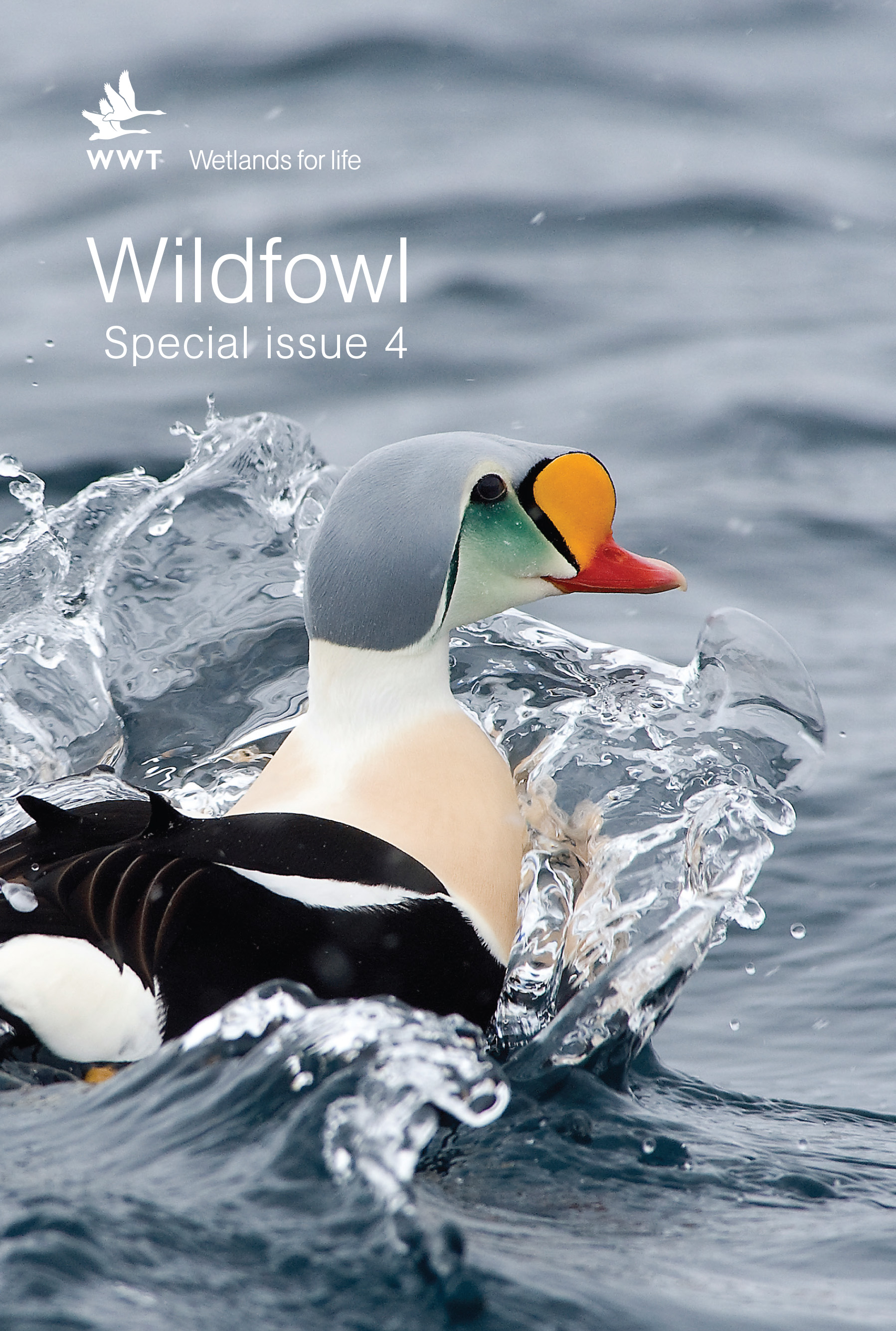
Main Article Content
Abstract
Waterfowl are among the best studied and most extensively monitored species in the world. Given their global importance for sport and subsistence hunting, viewing and ecosystem functioning, great effort has been devoted since the middle part of the 20th century to understanding both the environmental and demographic mechanisms that influence waterfowl population and community dynamics. Here we use comparative approaches to summarise and contrast our understanding of waterfowl population dynamics across species as short-lived as the teal Anas discors and A.crecca to those such as the swans Cygnus sp. which have long life-spans. Specifically, we focus on population responses to vital rate perturbations across life history strategies, discuss bottom-up and top-down responses of waterfowl populations to global change, and summarise our current understanding of density dependence across waterfowl species. We close by identifying research needs and highlight ways to overcome the challenges of sustainably managing waterfowl populations in the 21st century.
Article Details
Articles in Wildfowl volumes 1-74 and in Wildfowl Special Issues 1-7 are not licensed under Creative Commons. In these volumes, all rights are reserved to the authors of the articles respectively.
The Wildfowl & Wetlands Trust (which published the journal from 1948–2020 inclusive) retains a royalty-free license in perpetuity to access and use pre-2021 issues for the purposes of research, which may involve sharing with research partners from time to time.
The copyright for this paper belongs to the Author(s). Papers published in Wildfowl 75 (in 2025) and subsequent issues are licensed under a Creative Commons Attribution-NonCommercial-ShareAlike 4.0 International License.
In the articles published in these volumes, all rights are reserved to the authors of the articles respectively. This implies that readers can download, read, and link to the articles, but they cannot republish the articles. Authors can upload their articles into an institutional repository.