
Escape distances from human pedestrians by staging waterbirds in a Danish wetland
Article Sidebar
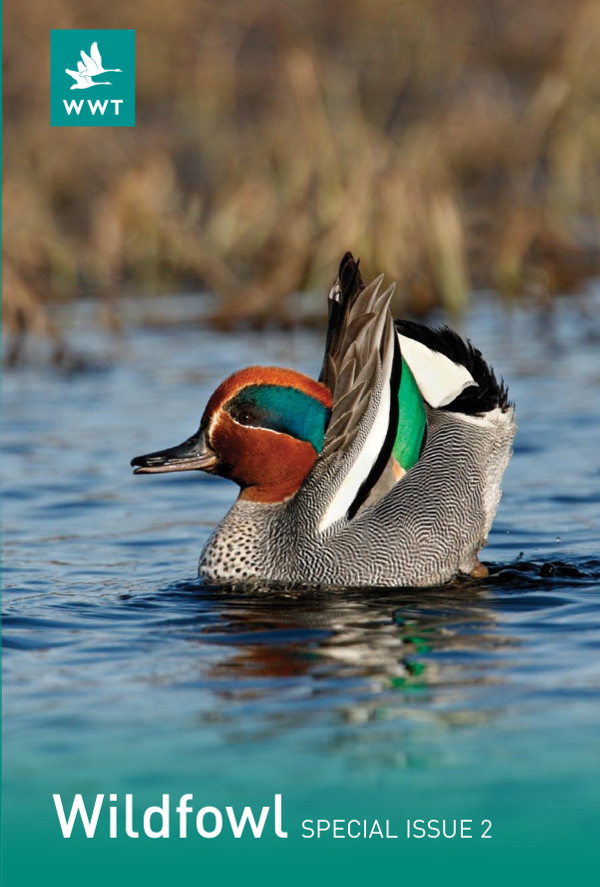
Main Article Content
Abstract
To aid planning of public access routes and the zoning of recreational activity in a Danish restored wetland, variation in the reactions of staging waterbirds to human activity were explored, using escape distances (measured as the distance at which the birds flush) as an index of sensitivity to pedestrians. Manipulative experiments showed species-specific responses in escape distances, including effects of body mass, flock size, flock composition, visibility of the stimulus to the birds and season. Mean escape distances increased with the mean body mass recorded for each species, although Wigeon Anas penelope flushed at greater distances than expected for their size. Birds in mixed flocks of Mallard Anas platyrhynchos and Teal Anas crecca reacted at longer distances than those in single species flocks for either species. Grey Heron Ardea cinerea escape distances increased through the autumn. Information about escape distances can be useful for advising on reserve design and for planning access within reserves, but there was evidence that waterbird escape distances are sitespecific which limits their wider applicability
Article Details
Articles in Wildfowl volumes 1-74 and in Wildfowl Special Issues 1-7 are not licensed under Creative Commons. In these volumes, all rights are reserved to the authors of the articles respectively.
The Wildfowl & Wetlands Trust (which published the journal from 1948–2020 inclusive) retains a royalty-free license in perpetuity to access and use pre-2021 issues for the purposes of research, which may involve sharing with research partners from time to time.
The copyright for this paper belongs to the Author(s). Papers published in Wildfowl 75 (in 2025) and subsequent issues are licensed under a Creative Commons Attribution-NonCommercial-ShareAlike 4.0 International License.
In the articles published in these volumes, all rights are reserved to the authors of the articles respectively. This implies that readers can download, read, and link to the articles, but they cannot republish the articles. Authors can upload their articles into an institutional repository.