
Habitat use and home range size of autumn staging radio-marked Teal Anas crecca at Ulvshale-Nyord, Denmark
Article Sidebar
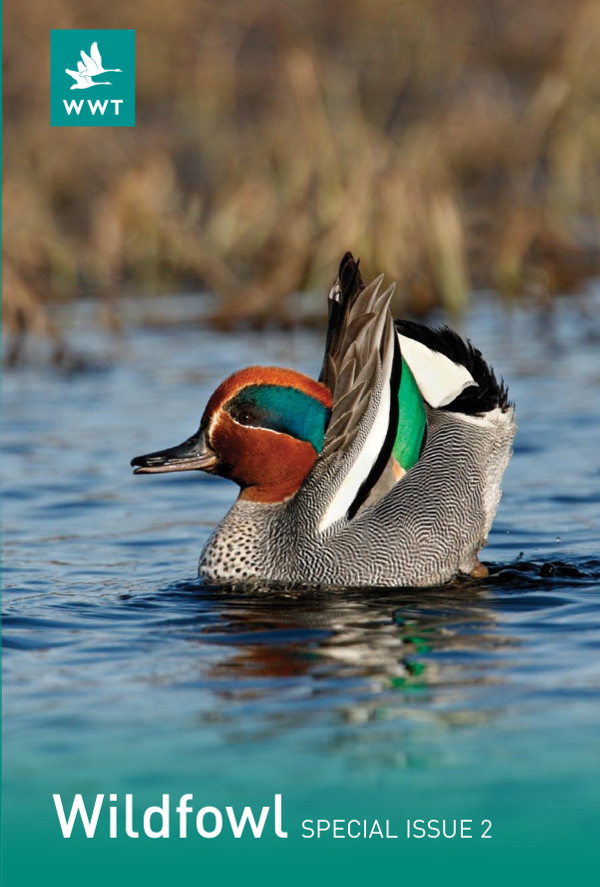
Main Article Content
Abstract
Optimal design and management of wetland reserves requires knowledge about how individual waterbirds exploit such sites and how different factors influence patterns of habitat use. To understand more about how Teal Anas crecca use shallow Danish coastal wetlands during autumn migration, 252 individuals were radio-tagged and tracked daily at a major staging site during September–December in autumns 1995–2001 inclusive. Teal generally preferred the same habitats by day and at night, but the relative use of shallow waters and saltmarsh varied extensively between years, mainly due to year-to-year variation in water levels in the shallows. Home ranges and movements were analysed for 142 individuals located on at least 10 occasions. There was no evidence for sex- or age-related differences in home range size and movements despite considerable individual variation. Based on 3,239 individual radio positions, largest home ranges corresponded with seasons when low water levels allowed most access to shallow coastal waters and to more extensive feeding opportunities generally. High water levels constrained Teal to rest and feed in saltmarsh areas throughout the day and night.
Article Details
Articles in Wildfowl volumes 1-74 and in Wildfowl Special Issues 1-7 are not licensed under Creative Commons. In these volumes, all rights are reserved to the authors of the articles respectively.
The Wildfowl & Wetlands Trust (which published the journal from 1948–2020 inclusive) retains a royalty-free license in perpetuity to access and use pre-2021 issues for the purposes of research, which may involve sharing with research partners from time to time.
The copyright for this paper belongs to the Author(s). Papers published in Wildfowl 75 (in 2025) and subsequent issues are licensed under a Creative Commons Attribution-NonCommercial-ShareAlike 4.0 International License.
In the articles published in these volumes, all rights are reserved to the authors of the articles respectively. This implies that readers can download, read, and link to the articles, but they cannot republish the articles. Authors can upload their articles into an institutional repository.