
At lade sig lyde
- en undersøgelse af psykofysisk tilstand efter korsang
DOI:
https://doi.org/10.7146/tdm.v11i1.158628Nøgleord:
musikterapi, korsang, velvære, VAS-skemaResumé
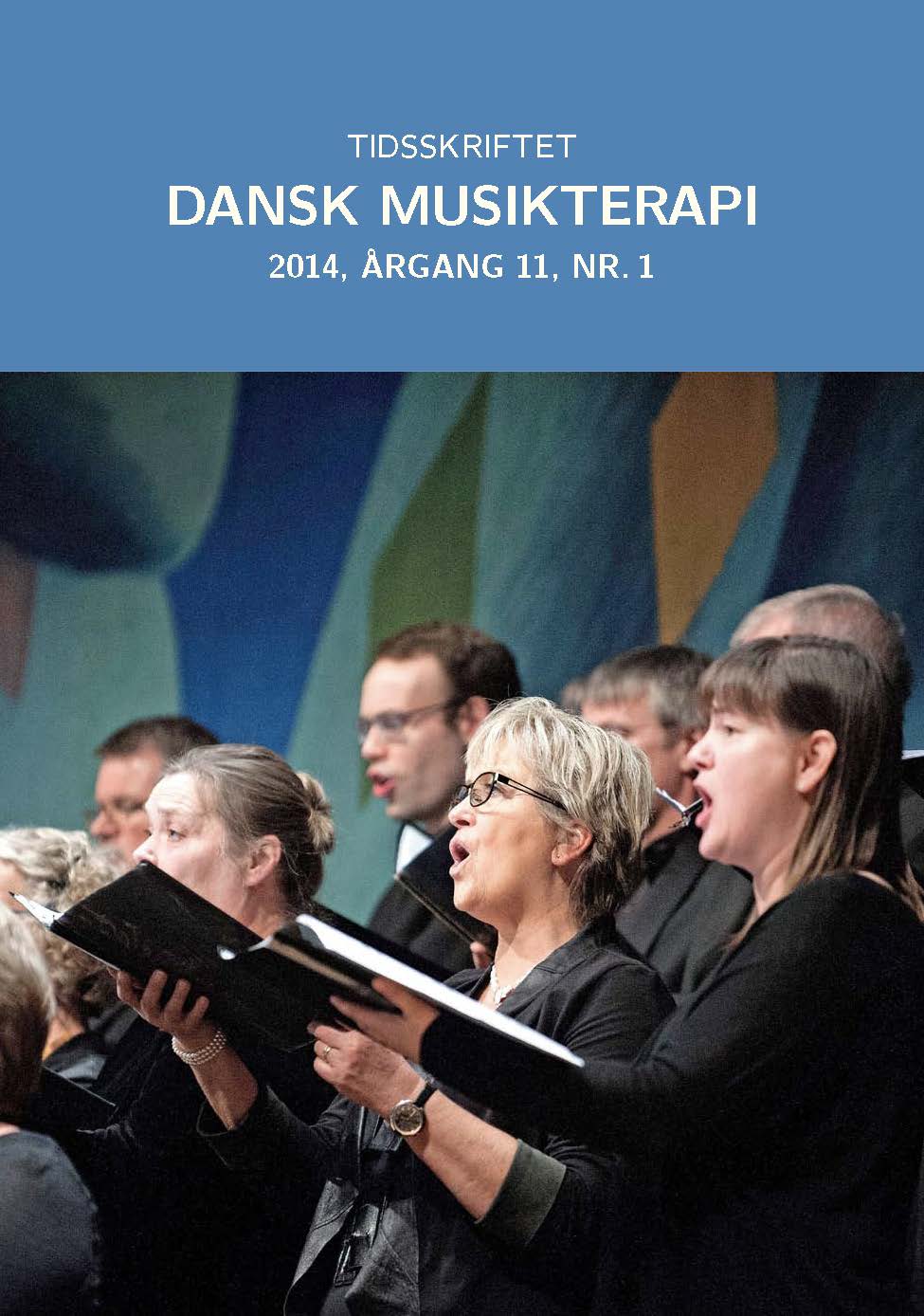
Artiklen er skrevet på baggrund af et studenterprojekt på efter-/videreuddannelsen Professionsrettet Musikanvendelse (PROMUSA) knyttet til musikterapiuddannelsen på Aalborg Universitet. Artiklens tre første forfattere er studerende på uddannelsen, mens artiklens sidste forfatter har været vejleder på projektet. Rapporten At lade sig lyde (Jensen, Buchhave & Raffnsøe 2012) har i sin helhed fokus på ændringer i den psykofysiske egenoplevelse i fire forskellige grupper. Denne artikel begrænser sig til at bringe resultaterne fra målingerne af to af grupperne – de to kor Nørrebrokoret og Glædens stemme.
Referencer
Ahearn, E. P. (1997). The use of visual analog scales in mood disorders: A critical review. Journal of Psychiatric Research, 31(5), 569-579.
Balsnes, A. H. (2010). Sang og velvære. En kartlegging af eksisterende forskning om sangens effekter. Oslo: Norsk visearkiv.
Beck, R. J., Cesari, T. C., Yosefi, A. & Enamoto, H. (2000). Choral singing, performance perception, and immune system changes in salivary immunoglobulin A and cortisol. Music Perception, 18(1), 87-106.
Beck, B. D. (2012). Guided Imagery and Music (GIM) with adults on sick leave suffering from work related stress – a mixed methods experimental study. Ph.d. afhandling, Institut for Kommunikation, Aalborg Universitet.
Bonde, L.O. & Stensæth, K. (2011). Musikk, helse, identitet. Skriftserie fra Senter for musikk og helse, 4. Oslo: Norges Musikkhøgskole.
Clift, S. (2012). Singing well-being and health, In: R. Macdonald, G. Kreutz, L. Mitchell (Eds.) Music, Health, & Wellbeing. Oxford: Oxford University Press (pp. 113-124).
Cohen, G. (2009). New theories and research findings on the positive influence of music and art on health with ageing. Arts & Health, 1, 48-62.
Grape, C., Sandgren, M., Hansson, L-O., Ericson, M. & Theorell, T. (2003). Does singing promote well-being? An empirical study of professional and amateur singers during a singing lesson. Physiological and Behavioral Science, 38, 65-74.
Jensen, H., Buchhave, S. & Raffnsøe, H. (2012). At lade sig lyde. Projektopgave på PROMUSA, Musikterapi, Institut for Kommunikation, Aalborg Universitet.
Jespersen, K. V. (2008). Den sunde fællessang. Dansk Musikterapi, 5(2), 14-17.
Kreutz, G., Bongard, S., Rohrmann, S., Hodapp, V. & Grebe, D. (2004). Effects of choir singing or listening on secretory immunoglobin A, cortisol and emotional state. Journal of Behavioral Medicine, 27(6), 623-635.
Ridder, H. M., Bolette, D. B., Engelschmidt, L.E. & Hyldgaard, S. (2009). MusikRGodt. Dansk Musikterapi, 6(2), 16-22.
Ruud, E. (2012). Musikk og identitet. Oslo: Norges Musikkhøgskole.
Skingley, A., Page, S., Clift, S., Morrison, I. Coulton, S., Treadwell, I.,Vella-Burrows, S., Salisbury, I. & Shipton, M. (2013). Singing for Breathing: Participants' perceptions of a group singing programme for people with COPD. Arts & Health, published online 23. 09 2013.
Stige, B. (2012) Invitation to community music therapy. E-bog. London: Taylor & Francis.
Theorell, T. & Kreutz, G. (2012). Epidemiological Studies of the Relationship Between Musical Experiences and Public Health. In: R. Macdonald, G. Kreutz, L. Mitchell (Eds.) Music, Health & Wellbeing. Oxford University Press (pp. 424-435).
Unwin, M., Kenny, D. T. & Davis, P. J. (2002). The effects of group singing on mood. Psychology of Music, 30, 175-185.
Vaag, J., Saksvik, P. Ø., Theorell, T., Skillingstad, T. & Bjerkeset, O. (2012). Sound of well-being – choir singing as an intervention to improve well-being among employees in two Norwegian country hospitals. Arts & Health, 5(2), 93-102.
Vickhoff, B., Malmgren, H., Åström, R., Nyberg, G., Ekström, S., Engwall, M., Snygg, J., Nilsson, M. & Jörnsten, R. (2013). Music stucture determines heart rate variability in singers. Frontiers in Psychology, 4, artikel 443.
Downloads
Publiceret
Citation/Eksport
Nummer
Sektion
Licens
Man må linke til og downloade artiklen, men ikke distribuere den kommercielt.


