Kroppe i forandring: forestillinger om omsorg i værker af Lea Guldditte Hestelund
DOI:
https://doi.org/10.7146/periskop.v2026i35.172395Resumé
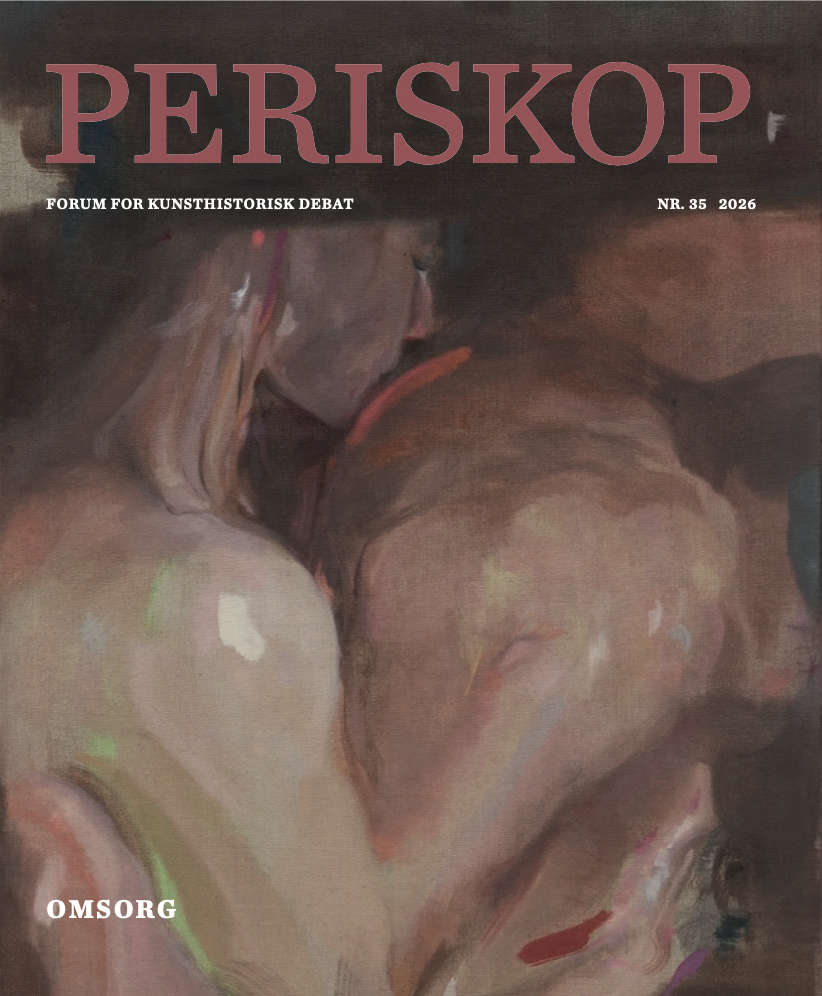
Artist Lea Guldditte Hestelund engages with the body as a material, a shape, and an ideological battlefield, and in recent years the caregiving body has entered her work. In this article, I examine how Guldditte Hestelund grapples with the mothering and caregiving body by examining the self-portraits Hissy Fit I (2022) and Hissy Fit II (2022), the photographs V. (2023) and E.I. (2023), and selected works from the exhibition Hissy Fit (2022). Building on feminist positions and in particular scholar Maria Puig de la Bellacasa, I argue that the works point towards an expanded notion of care by foregrounding other narratives and material kinship between human bodies and bodies of stone. Based on this, I argue that the works engage with care as a matter that is both personal and planetary, allowing an understanding of care that involves personal and ecological issues as well as timelines.
Downloads
Publiceret
Citation/Eksport
Nummer
Sektion
Licens
Copyright (c) 2026 Alberte Weihrauch Abramsen

Dette værk er under følgende licens Creative Commons Navngivelse (by).
Forfattere, der publicerer deres værker via dette tidsskrift, accepterer følgende vilkår:
- Forfattere bevarer deres ophavsret og giver tidsskriftet ret til første publicering, samtidigt med at værket 12 måneder efter publiceringen er omfattet af en Creative Commons Attribution-licens, der giver andre ret til at dele værket med en anerkendelse af værkets forfatter og første publicering i nærværende tidsskrift.
- Forfattere kan indgå flere separate kontraktlige aftaler om ikke-eksklusiv distribution af tidsskriftets publicerede version af værket (f.eks. sende det til et institutionslager eller udgive det i en bog), med en anerkendelse af værkets første publicering i nærværende tidsskrift.
- Forfattere har ret til og opfordres til at publicere deres værker online (f.eks. i institutionslagre eller på deres websted) forud for og under manuskriptprocessen, da dette kan føre til produktive udvekslinger, samt tidligere og større citater fra publicerede værker (se The Effect of Open Access).