Omsorgsfuld kunstanalyse
DOI:
https://doi.org/10.7146/periskop.v2026i35.172394Resumé
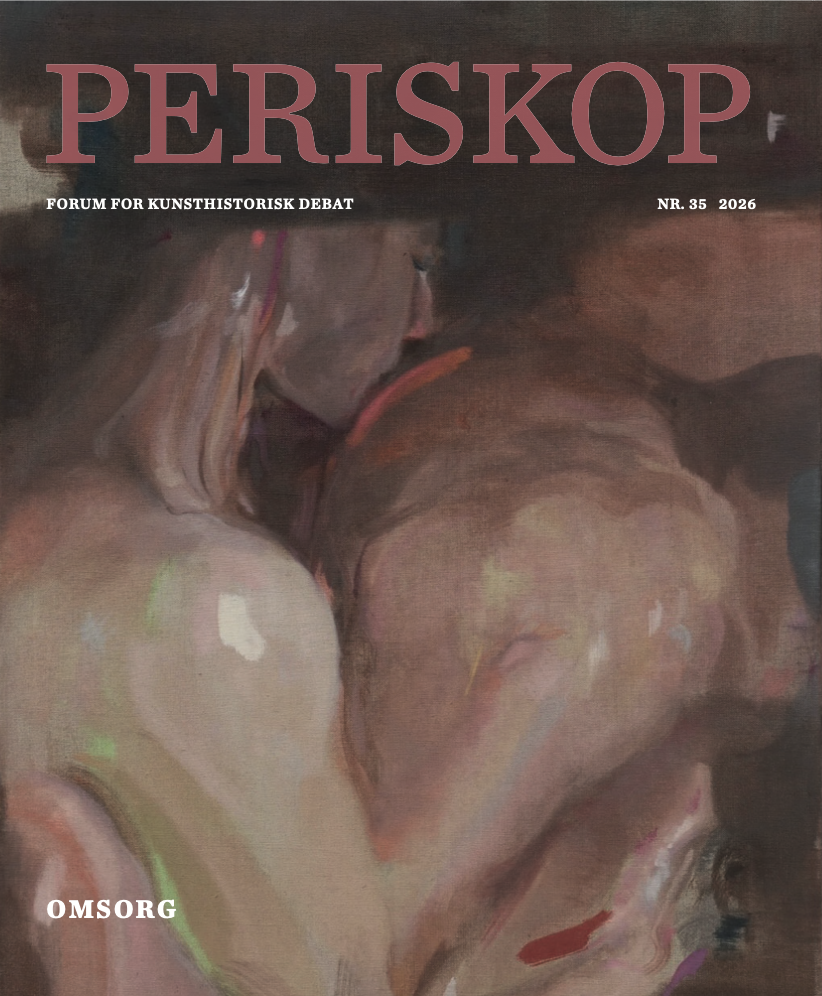
This article examines how contemporary art’s increasing blurring of the boundaries between the aesthetic and the socio-political fi eld, and the inscription of art’s capacity for reflexive transformation (Rebentisch 2015) of non-aesthetic space as its raison d’être, puts pressure on the analytical practices developed in the 20th century to understand and give meaning to art. Today, the very demarcation of an analytical “object,” an analytical “subject,” and an analytical “situation” in which they meet is, more than ever, a crucial part of the work of art analysis itself. We argue that, if we as researchers are to continue to substantiate and articulate the relevance of contemporary art, we must develop analytical practices that capture its potential reflexive transformation without reducing the complexity of either the analytical object, the analytical subject, or the analytic situation. Inspired by the work of Maria Puig de la Bellacasa (2017) and Michelle Murphy (2015) in formulating care as an epistemic strategy that is not opposed to conducting critical analysis but rather constitutes an integral part of “staying with the trouble” of analysis (Haraway 2010), we argue that contemporary art calls for a form of caring art analysis. We suggest practicing caring art analysis through multidimensional constellations (Benjamin 1977; 1999) that emerge through a series of analytical coordinates. In this article, we apply this tentative framework to two works of art from the exhibition RECAST, which was shown at Copenhagen University Library in the fall of 2025.
Downloads
Publiceret
Citation/Eksport
Nummer
Sektion
Licens
Copyright (c) 2026 Maj Ørskov

Dette værk er under følgende licens Creative Commons Navngivelse (by).
Forfattere, der publicerer deres værker via dette tidsskrift, accepterer følgende vilkår:
- Forfattere bevarer deres ophavsret og giver tidsskriftet ret til første publicering, samtidigt med at værket 12 måneder efter publiceringen er omfattet af en Creative Commons Attribution-licens, der giver andre ret til at dele værket med en anerkendelse af værkets forfatter og første publicering i nærværende tidsskrift.
- Forfattere kan indgå flere separate kontraktlige aftaler om ikke-eksklusiv distribution af tidsskriftets publicerede version af værket (f.eks. sende det til et institutionslager eller udgive det i en bog), med en anerkendelse af værkets første publicering i nærværende tidsskrift.
- Forfattere har ret til og opfordres til at publicere deres værker online (f.eks. i institutionslagre eller på deres websted) forud for og under manuskriptprocessen, da dette kan føre til produktive udvekslinger, samt tidligere og større citater fra publicerede værker (se The Effect of Open Access).