National identity politics and postcolonial sovereignty games: Greenland, Denmark, and the European Union
DOI:
https://doi.org/10.7146/mog-ms.v43.150098Abstract
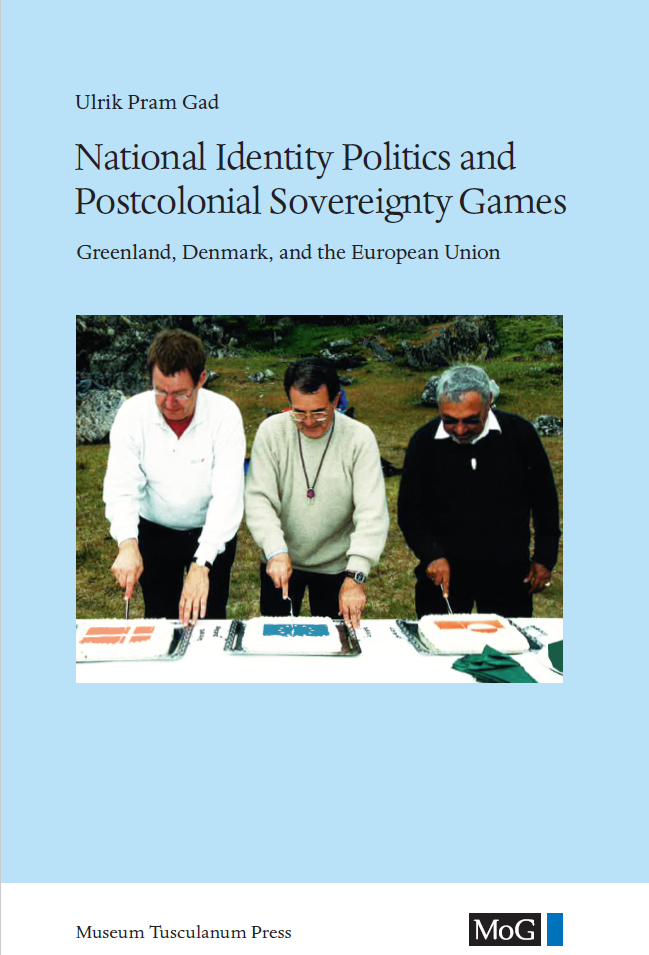
The relationship between Greenland and the EU is to a great degree influenced by the image of Greenland being on the path towards independence from Denmark. In both countries, identity discourse idealizes the homogenous nation state, leaving the ‘community of the realm’ in need of a good explanation. However, attempts to explain Greenland’s continued reliance on outside help in its development towards independence continuously risk infantilizing the country. As climate changes are establishing the Arctic as a site of mineral extraction and commerce, Greenland is finding new ways of diversifying its dependence.
Important in this regard is the way Greenland’s relationship to the EU is played out as a series of ‘sovereignty games’ that minimize Denmark’s role as intermediary. This book looks at changes to national identity discourse and foreign policy through four analytical strategies — identifying the core concepts of Danish and Greenlandic identity through discourse analysis; reading political debates as identity-political negotiations; using qualitative interviews with key actors to see how clashing identity discourses are managed in diplomatic practice; and approaching legal texts as the ‘frozen’ outcome of these ‘sovereignty games’. In conclusion, the book draws up scenarios for how the expiry date of the ‘community of the realm’ may be extended – by finding new metaphors that will facilitate equality, and by employing Danish diplomacy to make Greenland less dependent on Denmark.
Downloads
Published
Issue
Section
License
Coypyright by the authors and the Commision for Scientific Research in Greenland / Danish Polar Center/Museum Tusculanum Press as indicated in the individual volumes. No parts of the publications may be reproduced in any form without the written permission by the copyright owners.
