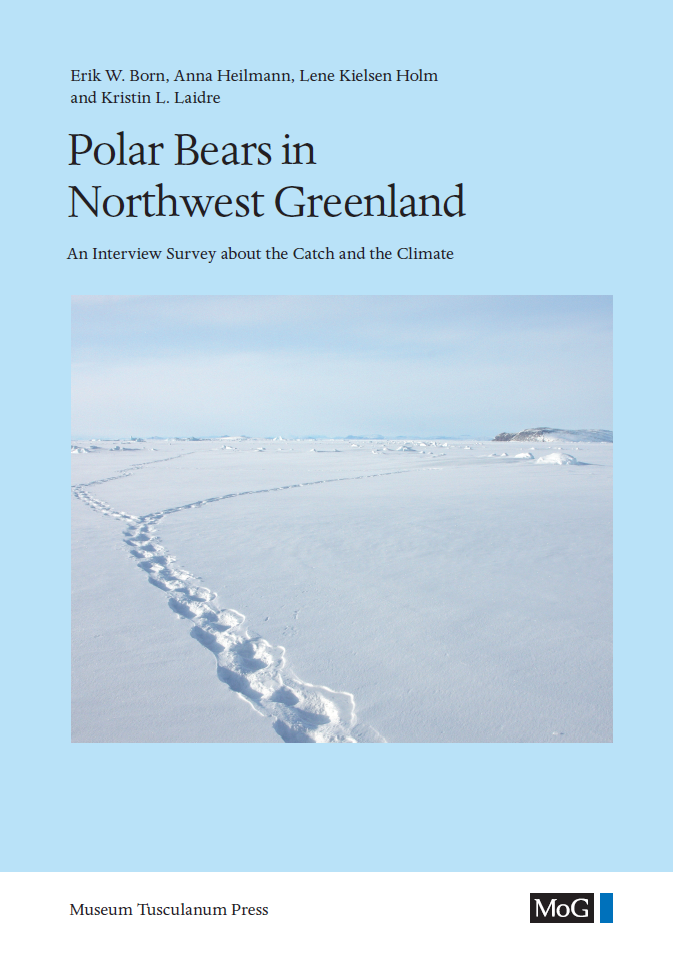
Polar bears in Northwest Greenland: An interview survey about the catch and the climate
DOI:
https://doi.org/10.7146/mog-ms.v41.150096Abstract
In February 2006, 72 experienced polar bear hunters living in the Qaanaaq (25) and Upernavik (47) municipalities (Northwest Greenland) were interviewed. Hunters were asked about polar bear biology, polar bear catch, climate change, and the effect of these changes on the polar bears and the catch. The rationale for this study was the indication from hunting statistics, satellite telemetry and second hand reports that the catch of polar bears in Northwest Greenland had increased since the early 1990s simultaneously with marked changes in weather conditions, sea ice cover and glaciers.
The majority of the informants noted an increased occurrence of bears closer to the coast (i.e. in areas usually used for hunting). About 31% of the answers specified that the reason for this change was an increase in the number of polar bears, whereas 16% of the answers specified it was due to a decrease in sea ice cover. The hunters in Qaanaaq were more inclined to believe that a decrease in sea ice cover explained the increase in coastal occurrence of polar bears, whereas the informants in Upernavik municipality primarily believed it was an increase in the total number of bears. It was not clear from the results when the change in bear density occurred. However, several informants expressed the opinion that polar bears were scarce during the 1960s and 1970s. During recent years, perhaps beginning in the 1990s, the hunters noted marked environmental changes. Most pronounced, and of greatest importance to hunting, was the decrease in sea ice cover. Ice formed later in the fall and broke up earlier in the spring. Sea ice was also reported to have become thinner. Furthermore, hunters also reported warmer and more unpredictable weather, including frequent storms and rain during winter.
Hunters also noted the glaciers retreated and parts of the edge of the Inland Ice Cap recessed. These changes have influenced both travelling and hunting activities in Northwest Greenland, in particular in the municipality of Qaanaaq where previous sled routes along glaciers and sea ice can no longer be used. In contrast, the boating season has been extended with increased open water, resulting in an increase in the fraction of polar bears caught from a boat (versus sled). This change, most pronounced in the southern parts of the Upernavik municipality, was mentioned by some of the informants as an additional reason for the increased catch of bears since the early 1990s (a boat has a larger range and can cover more ground faster than a sled).
About 24% of the informants said that polar bears demonstrated physical changes (e.g. had become thinner either as a result of increased competition or access to less food due to a decrease in sea ice). Thinner bears were most frequently reported in the Qaanaaq municipality than in the Upernavik municipality (ca. 52% and ca. 10% of the interviewees, respectively). The reason for the regional difference is not clear, but the results may (to an unknown extent) reflect the fact that informants in Qaanaaq generally had more experience hunting polar bears than those in Upernavik. No informants suggested that polar bear foraging had changed. In addition the study presents a variety of observations about the catch of polar bears, polar bear behaviour, and biology. The demography of the catch of polar bears in Northwest Greenland during 1952–2005 is described on the basis of 588 catches (754 polar bears).
Downloads
Published
Issue
Section
License
Coypyright by the authors and the Commision for Scientific Research in Greenland / Danish Polar Center/Museum Tusculanum Press as indicated in the individual volumes. No parts of the publications may be reproduced in any form without the written permission by the copyright owners.
