Postqualitative inquiries into digital study practices in higher education: Interplays of hesitations and speculations.
Charlotta Hilli, Åbo
Akademi University 
|
Abstract
Research on higher education students’ digital study practices and generative artificial intelligence (GAI) is contradictory. GAI may positively influence students’ learning by providing tailored and diverse feedback. However, if students use GAI unethically or uncritically, it may hamper their deep learning, cognitive and meta-cognitive growth, and problem-solving skills. Few studies provide practical insights into student and GAI collaboration, something this paper addresses. The study employs a postqualitative approach called thinking with theory, situating the researcher, contextual matters, and theories (Bildung, sociomaterialism) as active research participants when analysing student prompts to ChatGPT or Co-pilot in two PowerPoint presentations created by ten students during a bachelor course at Åbo Akademi University. The implications are that GAI created hesitant and speculative interplays that must be addressed to support digital study practices. Furthermore, lively interplays of humans, contextual (e.g., assessment methods) and other matters (e.g., course literature, PowerPoint) can aid in creating epistemic, ethical and aesthetically meaningful study practices in higher education. |
Introduction
Digital study practices in higher education have received increased attention because of publicly available generative artificial intelligence (GAI) technologies like OpenAI’s ChatGPT and Microsoft’s Co-pilot. Literature reviews suggest that GAI can enhance student learning by providing tailored feedback, text summaries, spell checks, and structured writing (Bahroun, 2023; Baidoo-Anu & Owusu Ansah, 2023; Bond et al., 2024). However, concerns have been raised about academic integrity and that GAI may hinder student agency, cognitive growth, and problem-solving skills (Darvishi et al., 2024; Yang et al., 2024), thus challenging study practices in higher education. Educational researchers encourage more empirical studies that offer detailed accounts of students’ coursework with GAI (Farrelly & Baker, 2023; Johnston et al., 2024; Nguyen et al., 2024; Ou et al., 2024). Aligning with this and the special issue theme, this study aims to provide practical insights into students’ digital study practices with generative AI like ChatGPT and Co-pilot.
The paper employs thinking with theory, a postqualitative approach that situates the researcher, materials and theories within a study as active participants shaping the changes that may or may not happen (Jackson & Mazzei, 2023). It is a speculative take that requires sensitivity to the research materials, methods and theories, something Springgay and Truman (2018, p. 204) call “the quivering unease of doing research differently” because researchers start in the middle of queries, not by following pre-established methods or theories. During a course, Pedagogical Idea History in Society in 2024, ten Finnish bachelor students prepared two PowerPoint presentations on historical perspectives and implications of AI for Bildung for an oral group assessment. Since the students did not want to share other materials from their studies with GAI, I interviewed the PowerPoints by attuning what and who mattered in them and plugging into two theories, Bildung and sociomaterialism, to inquire into digital study practices. The analytical question that formed during the study was:
· What potentials and tensions emerge in the human and matter interplays in the PowerPoint presentations from sociomaterial and Bildung perspectives?
Humboldt’s Bildung theory (sometimes called self-cultivation in English) connects specifically to pedagogical aspects of students' epistemic, ethical and aesthetic development in higher education (Horlacher, 2016). Humboldt’s idea of the interplay between humans and matter (i.e., the world) became productive in understanding the epistemic implications of student and GAI collaboration (Humboldt, 2010). By also welcoming a sociomaterial perspective, the effects of matter on the interplay became accentuated. Digital technologies (e.g., GAI, PowerPoint) are invited as participants in the interplay to understand epistemic and ethical effects on the group presentations. Gourley (2021) advocates that sociomaterialism can bridge contextual and practical matters in higher education. Digital technologies are frequently perceived as neutral and transparent, something humans can control, or disruptive educational game-changers beyond human influence, perpetuating them as disembodied and decontextualised, at the same time, positioning humans as passive recipients or active consumers in a capitalist digital landscape, disregarding higher education’s context and the co-mingling of humans and matter (Gourley, 2021). The current study contributes practical insights into digital study practices where GAI, among other materialities, complicate epistemic, ethical and aesthetic matters in higher education.
The article continues with a literature review on research on students’ study practices with GAI, followed by theoretical discussions about Bildung and sociomaterialism in higher education. The third section includes methodological considerations regarding the postqualitative approach and analysis of the research materials and their implications. The last section discusses how digital matters shape digital study practices, sometimes resonating with but also complicating previous research.
Literature overview
GAI technologies are actively involved in processes and relations that previously usually belonged to the teacher and student, such as tailored feedback that may improve student learning and motivation (Yang et al., 2024). Research suggests that GAI can create engaging and dynamic study environments where students feel self-assured and inspired (Javaid et al., 2023). Still, researchers worry that if students rely on GAI feedback to create assignments rather than learn from it, that might hamper their agency, cognitive and metacognitive growth, deep learning and problem-solving skills (Chan, 2023; Darvishi et al., 2024; Yang et al., 2024).
In Tassoti’s study (2024), chemistry student teachers often used conversational prompts (naïve prompts) rather than providing specific and contextual information (reflective prompts) to ChatGPT, leading to lower rates of answers and dissatisfaction with the answers among students. After being presented with a five-step prompting guide, the students’ prompts improved regarding contextuality and specificity, as did the answers provided by ChatGPT. The study suggests students with better content knowledge were more likely to develop better prompts and less likely to accept ChatGPT’s answers uncritically. Introducing students to relevant prompting strategies is essential but potentially more influential when students have gained more knowledge about the content at the end of a course.
In Yang et al. (2024), one group used GAI as a resource to ask ‘what’ questions and used goal-oriented approaches. The other group used GAI to reflect on its possibilities and drawbacks, suggesting an introspective and reflective approach kin to deep and life-long learning (cf. Bildung). Similarly, Ngyuen et al. (2024) compared two doctoral student groups and identified a deep learning approach and complex study strategies with GAI among high-achieving doctoral students enriching their academic writing. Low-achieving students' GAI had developed more linear and potentially superficial strategies for GAI, suggesting less diverse and critical engagement with the content GAI produced. In Johnston et al. (2024), students used GAI for academic and personal reasons and explored creative ways to include it in their studies. Furthermore, the student population in higher education is diverse, and GAI seems to support students from different backgrounds (international, non-academic) and with different needs (disability). Material dimensions include the cost of GAI; although most services are free, universities must provide students with GAI technologies to ensure equal access (Farrelly & Baker, 2023).
Ou et al.’s (2024) posthumanist study investigated Swedish students’ views on GAI, suggesting that it can become an accessible digital teacher when checking grammar, translating or summarising academic texts, and developing texts and ideas. However, the reliability of AI manifests as issues with it as a content creator and subject-specific knowledge. Students’ academic communication practices with AI are diverse and situated. Students were cautious about AI writing large parts or whole assignments, while language improvements were acceptable, positioning epistemic practices within humans rather than between humans and machines. The authors advocate higher education redesign assignments and assessment methods to support students’ academic communication skills rather than banning AI or assuming plagiarism (Ou et al., 2024).
Chan (2023) confirms that students do not necessarily approve of GAI writing assignments for them, but many still use GAI for this purpose. Universities must develop policies to support students’ study skills and ethical considerations regarding AI, such as data integrity, transparency and security, to ensure the responsible implementation of AI in higher education. Most AI policies are developed regarding students as a future AI-literate workforce, but education includes other equally important purposes, such as developing ethical and critical abilities (cf. Bildung) (Chan, 2023).
Hasse and Bruun (2023) explored the Socratic idea of unknowing concerning student use of ChatGPT at a Danish university. When their students asked ChatGPT questions, it delivered and sometimes fabricated the content (cf. hallucinations). However, it did not provide questions about the content it presented. Hasse and Bruun critique the idea that GAI can personalise feedback and act as a teacher, as the technologies at the time of the project could not adapt to the Danish context and individual needs of students. They suggest that the expertise that human teachers and human-generated texts can offer is vital in addressing questions about knowing and unknowing, which are relevant in higher education.
Previous research offers insights into students’ diverse inclinations, attitudes and epistemic strategies when studying with GAI. At the same time, the agency of GAI remains implicit, most notable when, for example, forcing students to learn new prompting skills or assessing the GAI content critically. This study shifts the focus from a humanist stance to what happens between GAI and humans, suggesting prompts can become multiple albeit complex material starting points for digital study practices.
Sociomaterial interplays of Bildung in higher education
This study attends to digital study practices as interplays of human and digital technologies by engaging with pedagogical and sociomaterial theories, offering opportunities to consider the complexities of situated digital study practices by welcoming material agents into the conversation (Fenwick et al., 2011; Gourley, 2021).
In the German and Nordic countries, and the site for this study, a Finnish university, Bildung is deeply connected to education, dating back over 200 years (Sjöström & Eilks, 2021). Different strands relate to individual pursuits of knowledge and self-development as well as social and cultural matters. Humboldt was the first to connect Bildung to higher education, and his definition is still widely accepted (Horlacher, 2016). Bildung is a personal pursuit of general knowledge for lifelong learning, enabling and promoting educational action (Horlacher, 2016; Humboldt, 2010). Humboldt (2010) identified a need for more than human thought and activity, namely an interplay with the world, something he calls nonman (cf. matter). In this animated interplay, knowledge becomes lively, and the potential of Bildung is pronounced. The interplay suggests a balance between reason and emotion, contemplation and activity because Bildung becomes impossible if humans are expected to grasp everything known (Lüth, 2010). The pedagogical implications are that higher education should allow students time and space to acquire knowledge and develop ethically and aesthetically (Lüth, 2010; Wiberg, 2016). Higher education should introduce relevant facts so students can identify problems and solutions and learn how to proceed based on them, connecting them to theoretical and practical endeavours (Bohlin, 2008), resonating well with the practical aim of this study.
Nevertheless, Bildung has received criticism. Some claim it is obsolete because it cannot address societal issues or change education meaningfully (Barnett, 2024; Horlacher, 2016; Wiberg, 2016). Bohlin (2008) questioned whether Bildung might be too vague, ambiguous, and challenging to implement in higher education. Still, despite or perhaps because of its elusiveness, Bildung attracts attention, carrying promises of both epistemic and ethical transformations, making it a unique pedagogical concept (Horlacher, 2016; Taylor, 2017). The critique against Bildung encouraged this study to shift from a humanist focus to productive and shared relations between humans and matter (e.g., sociomaterialism). Posthumanist Bildung is a novel approach kin to sociomaterialism developed by Carol Taylor in 2017. It refers to contextually sensitive and relational processes where being and knowing are inseparable. Taylor calls these dynamic processes knowing-in-becoming and points to the political and economic (i.e., material) matters also shaping relations in higher education. Posthumanist Bildung draws on human meaning-making with other actors, creating problems in this study since no such data existed. Instead, Humboldt’s interplay offered a starting point for analysing the PowerPoints by inviting the material world into the conversation through sociomaterial theories.
Sociomaterialism addresses the impact of materialities (e.g., objects, texts, buildings) on educational practices by attuning to human and matter relations (cf. interplay), refuting a singular focus on either entity (Fenwick et al., 2011). This study follows Fawns’ (2022) proposition that humans and digital technologies mutually shape complex educational situations. Often, dichotomies are upheld when researchers separate pedagogy and digital technologies by placing either first or last (Fawns, 2022). Focusing on digital technologies can overstate the importance of students' digital competence at the cost of other humans (e.g., teachers and students) and contextual matters (e.g., teaching methods). Placing pedagogical matters first (e.g., Bildung) may understate how digital technologies shape educational practices and overstate human influence on, for example, digital study practices.
Similarly, Gourley (2021) highlights that higher education’s diverse student population may experience the impact of digital technologies differently in their studies (Farrelly & Baker, 2023). Gourley advocates a critical stance against digital technologies as neutral, transparent, or disruptive because such predispositions tend to overlook how digital technologies impact students and faculty (see Fawns, 2022). Digital technologies are frequently pushed into education by educational technology companies wishing to sell software, gain access to student data and develop software rather than improve pedagogical practices with students and faculty members (Gourley, 2021).
Large Language Models (like ChatGPT and Co-pilot) often develop through machine-human interactions, resulting in ethical dilemmas for higher education (Chan, 2023). Researchers tend to agree that many students use GAI and will need to understand it as citizens and workers (cf. Johnston et al., 2024; Yang et al., 2024). However, asking students to use GAI means they will contribute free labour to develop the models, which contradicts most universities’ ethical commitments and creates a considerable carbon footprint for GAI (Milano et al., 2023). Such considerations seem prudent from both Bildung and sociomaterial perspectives. Some universities have rushed to create guidelines that prohibit or limit the use of AI without considering the purpose of higher education and educating students in an AI-immersed world (Chan, 2023; Johnston et al., 2024). In this study, the university guidelines stated that GAI was encouraged, and teachers decided how and when to use it; for these reasons, I encouraged bachelor students to test and reflect on GAI to support their digital study practices.
Thinking with theories and digital matter
This study employs Jackson and Mazzei’s thinking with theory (2023). In this postqualitative research approach, researchers entangle themselves with a study by plugging it into research materials, theories and other matters. Thinking with theory connects to ontological speculations rather than representing universal truths and step-by-step accounts of methods. Jackson and Mazzei (2023, p. 135) suggest that plugging in is a thinking technique requiring slowing down and resting in the becoming of a study, often by sensing the unthought before the becoming-questions form. They draw on Deleuze and Guattari’s view of immanence and becoming when investigating differences or changes that matter or become meaningful. Becoming is not a fixed notion; it is moving with, attuning, and responding to conditions, concepts, materials, landscapes, etcetera. Likewise, Bildung is ontologically focused on change (cf. being), although it is rooted in humanistic ontologies (Sjöström & Eilks, 2021). Rather than viewing humans as the only ones changing, as Bildung theories generally do (Humboldt, 2010; Taylor, 2017), sociomaterialism points to how and why digital technologies matter in higher education (Gourley, 2021).
A postqualitative approach resonated with this study, which started amid the hype of generative artificial intelligence (Johnston et al., 2023). However, previous research pointed to epistemic and ethical challenges (see the literature overview), contradicting optimistic expectations of GAI’s impact on higher education. The research materials came from a Pedagogical Idea History in Society course I taught in the Spring of 2024. My university expected teachers to decide when and how to use GAI in courses and encourage responsible GAI use among students, making me consider how to support student knowledge about GAI in a group assignment on Bildung. I initially asked the students to document their experiences and feelings about their GAI collaboration and provided them with an informed consent form. When no students shared such materials, I had to rethink the study’s focus. Instead, I asked the student groups permission to analyse their presentations, reminding them of the ethical guidelines researchers follow regarding respecting participant anonymity and personal data integrity (Finnish National Board on Research Integrity, 2019).
This is best described as a pilot study part of a research project called CO-WRITE: Collaborative academic writing in hybrid learning spaces in higher education at Åbo Akademi University about students’ collaborative academic writing with GAI among other actors (2025-2027). The pilot study made the project members consider different ways to engage with students (e.g., workshops) rather than individual data collection methods like interviews or self-documentation. There may be various reasons for students not participating in similar studies, e.g. limited knowledge of or interest in GAI or fear of negative academic consequences.
My pedagogical and research interests in GAI, the available research materials, course context and theories shaped the pilot study, leaving me without my envisioned research materials about student and GAI involvements. The two PowerPoint presentations included student prompts directed at ChatGPT or Co-pilot and while listening to the oral presentations, I sensed the prompts carried ethical implications. These potential ethical matters led me (back) to Humboldt’s Bildung theory but also pointed to productive and unproductive sociomaterial interplays in the PowerPoints that I wanted to explore further (Lüth, 2010; Gourley, 2021).
The research material made me consider possible analytical approaches when student experiences (interviews, reflections) were unavailable. This led me to sociomaterial theories and interviewing objects in education to understand how they shape and become shaped by digital epistemic practices (Fenwick et al., 2011; Gourley, 2021). Interviewing objects differs from humans who can answer questions, so approaching objects requires material sensitivity and attuning to what-who is acting, trying to trace the matter-human relations in specific situations (Adams & Thompson, 2016, p. 46). It means allowing the digital objects to speak for themselves during the analysis and accepting the situatedness of the researcher within the study. Similarly, Jackson and Mazzei (2023) write about researchers plugging into theories and materials by thinking with them rather than about them. Decentering and situating the researcher means moving away from notions of objective and outside observers that uncover universal truths. The postqualitative approach often aims to complicate or reimagine education by involving matters and effects disregarded by other research approaches.
My analytical approach was to follow what and how matters shaped the presentations, attune to the potentials and tensions they created, and note them in a digital document (Adams & Thompson, 2016). I was initially interested in students’ prompts to GAI and how they shaped the presentations. I plugged into the PowerPoint slides by focusing on prompts that intrigued me because they pointed to hesitations and speculations regarding GAI’s role following the study’s aim to complicate and offer practical insight into student and GAI study practices. Sometimes, I included my memories from listening to the presentations, too. I plugged into the Bildung and sociomaterial theories, previous research and noted relevant references in the analysis to explain my thinking with process (Jackson & Mazzei, 2023). In the results section, I added screenshots of slides to exemplify the analysis. I decided to add contextual information about the slides rather than translating all Swedish slides into English.
Given my initial research interest, the prompts to ChatGPT or Co-pilot became the first material actor I attuned to. I chose four prompts on four slides connected to four adjoining slides pointing to epistemic and ethical potentials or tensions. Group 1 presented four thinkers, Aristotle, Comenius, Kant, and Herbart, and their ideas of education, Bildung, and possible views of AI. The analysed prompts were If Aristotle would have liked AI and Comenius thoughts on Bildung in bullet-points. Group 2 presented Aristotle, Wollstonecraft, Kant and Vygotsky's ideas of education and Bildung. Group 2 began and ended the presentation with suggestions about what AI means for education. The analysed prompts were What is mediated learning shortly and What does rational and empirical approaches mean. Explain shortly. Other matters in the slides emerged during this process, like bullet points, sub-points, lists, and course literature. Given the views on GAI in educational research presented in the introduction and literature review, I expected the students to welcome and use the technologies actively and uncritically. Instead, the analysis suggests speculative and hesitant study practices with GAI and the impact of PowerPoint on the narratives and structure of the slides.
The course context and materialities
The research material was created during a bachelor's course for students in a Pedagogical leadership and school development program at Åbo Akademi University from March to May 2024. It covered the history of pedagogical ideas in society, focusing mainly on European and Finnish thinkers. Higher education in Finland is free of charge and follows secondary education (gymnasium or vocational school). Course literature is available through the university library, and students are not expected to buy or pay for course books. It was the only historical course in the bachelor program. I usually teach it because of my teacher qualification in history and social studies. Previously, I always included discussions about digitalisation and education, but not specifically GAI, nor have I required students to prepare digital presentations for the oral exam. Several students noted AI's topicality when the course started and were positively surprised that it was included in a history course. They also appreciated the oral assessment method.
The group assignment required them to present four historical views on Bildung and test GAI software, as well as share screenshots of their prompts and GAI’s answers in a digital presentation. I encouraged students to use Microsoft’s Co-pilot, which they could access via their university profile, but most used ChatGPT 3.5, the latest free version, at the time of the study. The students collaborated in groups of five. Two out of three groups shared their PowerPoint presentations to be analysed. The oral exam required all group members to participate, and it was held on campus in May 2024. Each group had 25 minutes, followed by a discussion with me when we also evaluated the course. The other groups were not present during the presentations. Figure 1 provides information about the group assignment.
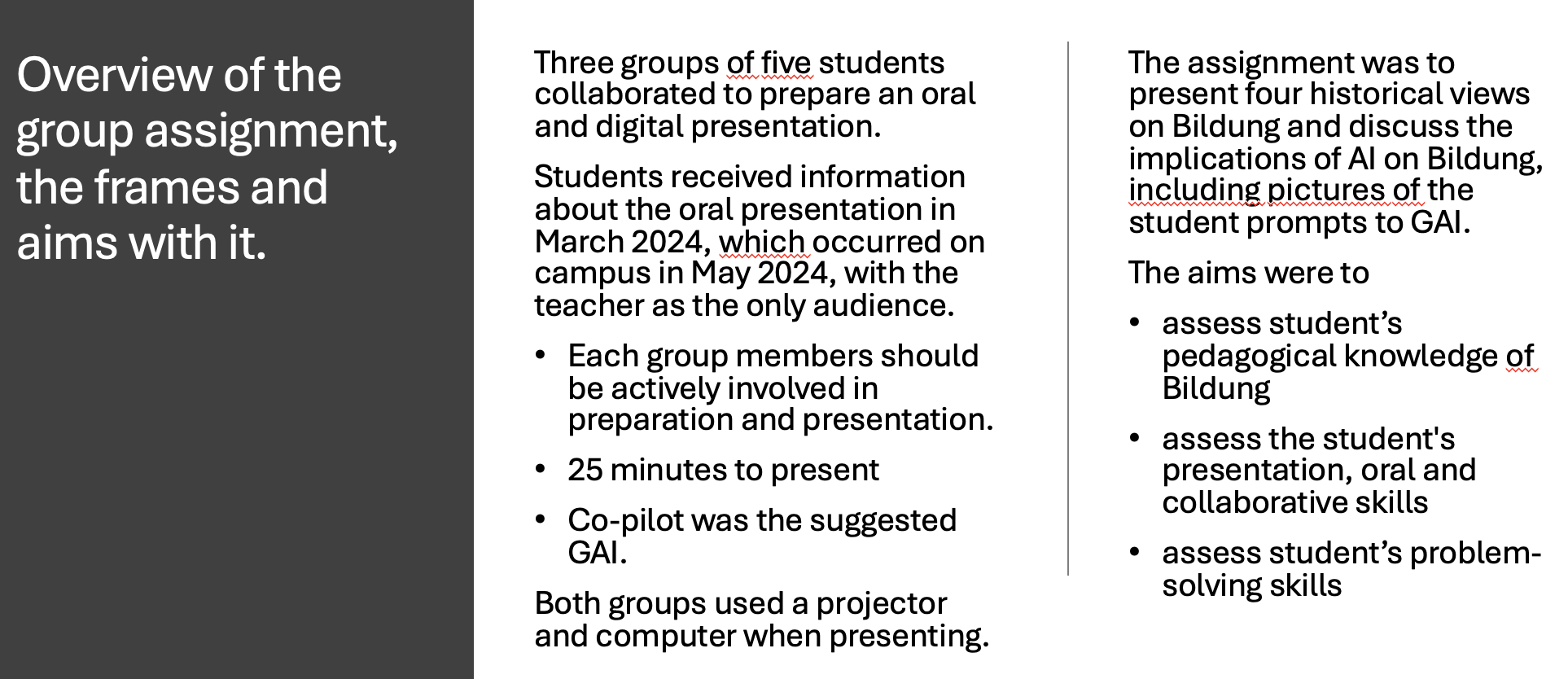
Figure 1. Overview of the group assignment.
The course offered four seminars, consisting of lectures from the author or colleagues about historical ideas about education and knowledge in a European, Nordic, and Finnish context. The lecture notes were created digitally in Prezi and shared on Moodle. Other digital materials included videos or podcasts related to the themes. The course required students to read excerpts from Immanuel Kant, Ellen Key, Friedrich Herbart, and Friedrich Pestalozzi in the Swedish course book Den tidlösa pedagogiken (Kroksmark, 2011). Figure 2 provides an overview of the course outline and themes.
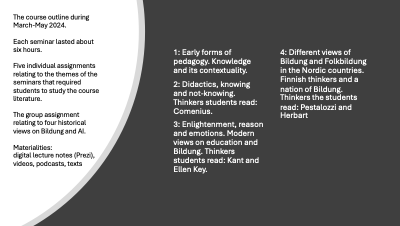
Figure 2. An overview of the course outline.
The students worked in study circles when preparing for the oral group presentation and during seminar discussions. Study circles relate to Nordic ideas of folkbildung (in Swedish folkbildning), where adults in popular education meet in groups without a teacher to discuss matters they want to explore, supporting their autonomy, responsibility and citizenship (Pastuhov, 2017). In the individual assignments, students reflected on a topic from a historical period and studied the course literature individually, although they could discuss them with their study circle. We touched upon artificial intelligence when I introduced the research study and explained that little is known about how students study with GAI. Still, I did not give them any further information about GAI or suggestions about how to use it.
The course was inspired by Humboldt’s ideas of the seminar as a teaching method to support students’ Bildung processes and allow them the freedom to explore ideas scientifically (Öberg, 2011). However, I follow Nussbaum’s suggestions that conflicts and critique must also be highlighted in seminars to address possible tensions with pedagogical ideas (Öberg, 2011). In this course, collaboration builds on ideas of formal Bildung to enhance students’ social and collaborative skills through discussions and a group presentation. In contrast, the seminars, individual assignments, and course literature followed the ideas of material Bildung to provide content (e.g., facts and perspectives on knowledge, pedagogy and Bildung) for students to learn (Sjöström & Eilks, 2023; Wiberg, 2016).
Thinking with Bildung and sociomaterialism
Thinking with Bildung and sociomaterialism meant analysing interplays between students, GAI, PowerPoint and course literature. Sometimes, the interplays resulted in speculations pointing to the potential to further study the course content with GAI and other course matters. Hesitations emerged because students did not connect epistemically, ethically or aesthetically meaningfully to the assignment or GAI, creating stale, static, and not lively interplays (Humboldt, 2010). When the students prioritised the course literature over GAI, it often helped create epistemically and ethically sound presentations. At the same time, GAI became invisible in the presentations, and its epistemic potential became mute or unrealised. From a sociomaterial perspective, digital technologies like GAI require procedural knowledge to navigate (Gourley, 2021). The students prompted GAI for conceptual clarifications and input on AI and Bildung, suggesting multiple epistemic starting points connected to their limited knowledge and study interests relating to the assignment. The GAI feedback was quick and usually short. Still, it created hesitations in the presentations since GAI’s answers were not connected meaningfully to the assignment and presentation. Following Tassoti (2024), discussing prompting strategies beforehand would have been advisable since my university did not offer clear guidelines for students or teachers, making this an explorative but also naïve teaching attempt to support student GAI knowledge with questionable results.
Both student groups chose PowerPoint without my encouragement. Each group member was responsible for specific slides, possibly because the assignment required them all to contribute. The students often included many bullet points or multi-point lists, with less aesthetic results (e.g., coherent visual style, fewer spelling errors), something PowerPoint could have helped them correct and redesign. According to Adams (2010), users must learn to read and write with PowerPoint and its functions (menus, templates, toolbars). Furthermore, they must interpret the slides for the audience, creating a collapsed narrative of bullet points and sub-points. The presentations became shaped by the logic of collapsed narratives (slides, fragmented entries, bullet points, sub-points, lists). Both groups included much information in their slides, complicating the narrative focus and creating an information overload, considering the time for the oral presentation of 25 minutes divided between five students.
The course context may have intensified the tensions brought on by PowerPoint. This was the only history course in their study program focused on pedagogical leadership and general educational theories. This probably added to the material epistemic tensions because the presentations focused on thinkers, not ideas. I also often took thinkers as a starting point during seminars, as did one of the course books both groups used. Their limited historical knowledge could have prompted them to create shorter presentations with less information. Instead, the students seemed hesitant about what Bildung meant because the presentations covered a broad spectrum, including education, knowledge, and ethical development. Given the time frame, focusing on a coherent narrative was challenging. Attuning to digital technologies like GAI and PowerPoint can help reimagine teaching in higher education. The students could have turned in an outline for the presentation beforehand to be discussed with the teacher, or they could have edited it afterwards to improve the content and their digital communication skills (Ou et al., 2024). The course design and digital technologies shaped the Bildung interplays, highlighting the pedagogical considerations required when planning coursework that may complicate students’ digital study practices compared to studying with books and humans (cf. Hasse & Bruun, 2023).
Interplays of speculation and hesitation
In the analysis, speculative study practices emerged in the interplay between humans and digital technologies. Group 1 presented Aristotle’s epistemological contributions (e.g., praxis, theory, episteme, techne, phronesis) in one slide, followed by a screenshot of a prompt to ChatGPT: Would Aristotle have liked AI (Figure 3). ChatGPT mentioned Aristotle's interest in nature and possibly being open to new ways machines can simulate reality and nature, but also uneasy about the ethical and philosophical implications for humans. Still, ChatGPT stated that this is all speculation since we cannot know what Aristotle thought about AI. This speculative opening from ChatGPT did not encourage the students to reflect on Aristotle’s epistemic contributions, which they had presented, nor did it prompt ChatGPT to refine its answer. Instead, the students agreed with ChatGPT on possible ethical issues when humans rely too much on AI and do not learn topics themselves. Ironically, instead of engaging with the assignment, course literature and ChatGPT’s suggestions, the students uncritically accepted and included ChatGPT’s answer in the presentation. The speculative interplay became shaped by the naïve prompt, suggesting the students had not studied the thinker's educational contributions in-depth to provide a contextual and specific prompt. Still, since they had not received any training on writing prompts, they probably referred to a conversational style rather than a reflective one (Tassoti, 2024). The prompt was included because the assignment required it, and it was a creative way to engage with ChatGPT. Still, the speculative interplay did not encourage epistemic connections between the students, the assignment and GAI (e.g., new questions, prompts or ideas).
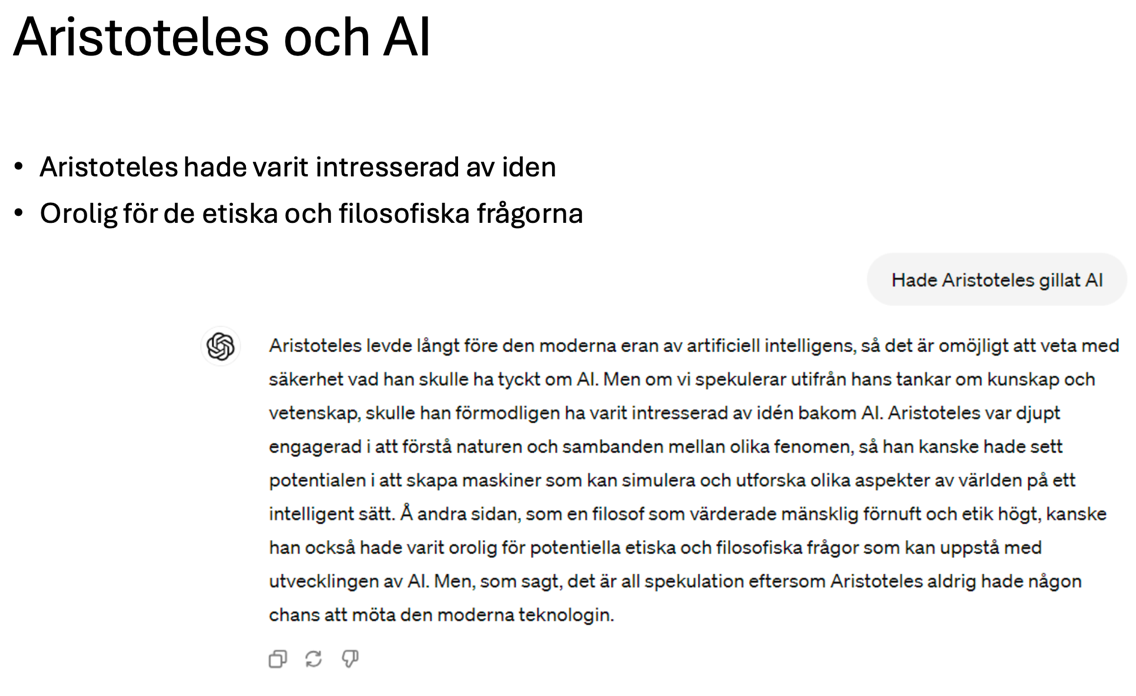
Figure 3. Group 1’s prompt to ChatGPT about whether Aristotle liked AI and its speculative answer.
Group 2’s presentation suggested epistemic tensions when considering PowerPoint and the assignment. Group 2 prompted GAI to provide conceptual clarifications about rationalism, empiricism and mediated learning. The students noted that academic literature is full of difficult words, and GAI assists them when reading and preparing written assignments. The Vygotsky presentation started with a slide summarising the sociocultural theory of learning and its educational implications, which could have been an opening to AI as a sociocultural resource. Interestingly, the students prompted Co-pilot to explain mediated learning briefly (Figure 4). Co-pilot provided a correct suggestion regarding mediated learning that could have been another way of discussing AI and Bildung. Instead, one of the Vygotsky slides included a title, Mediated learning, but that was followed by bullet points and a numbered list with concepts and ideas relating to the proximal zone of development (Figure 5). The students struggled to explain the content in Figure 5 and did not connect the bullet points to the assignment. These slides puzzled me, and I wondered why they chose concepts they could not explain nor connect to Bildung or AI. I suspect Vygotsky was a familiar thinker from previous bachelor courses in pedagogy. Still, their prior knowledge did not support them in approaching sociocultural aspects of GAI on Bildung. PowerPoint functions contributed to a collapsed narrative with bullet points and lists rather than a coherent narrative related to the assignment (Adams, 2010). Potentially, Co-pilot could have sparked a discussion about mediated learning perspectives on AI. The PowerPoint logic may have inspired a focused epistemic structure with reduced content and fewer bullet points, which could have reduced the slide’s material epistemic tensions.
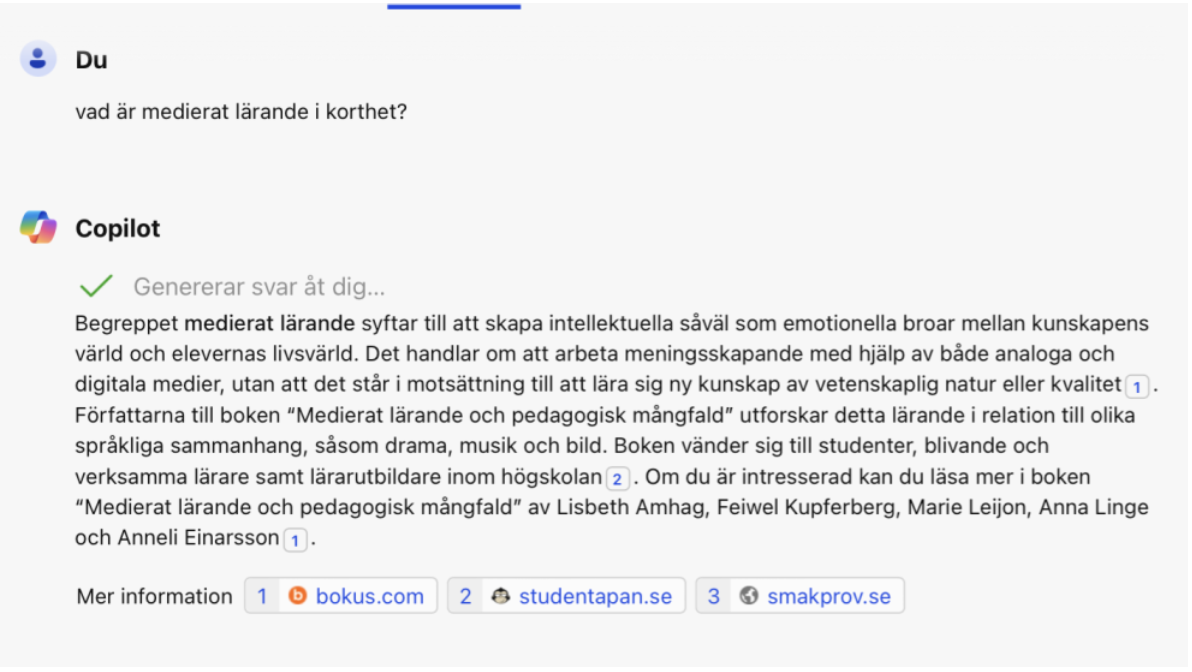
Figure 4. Group 2’s prompt to Co-pilot about a concise meaning of mediated learning.
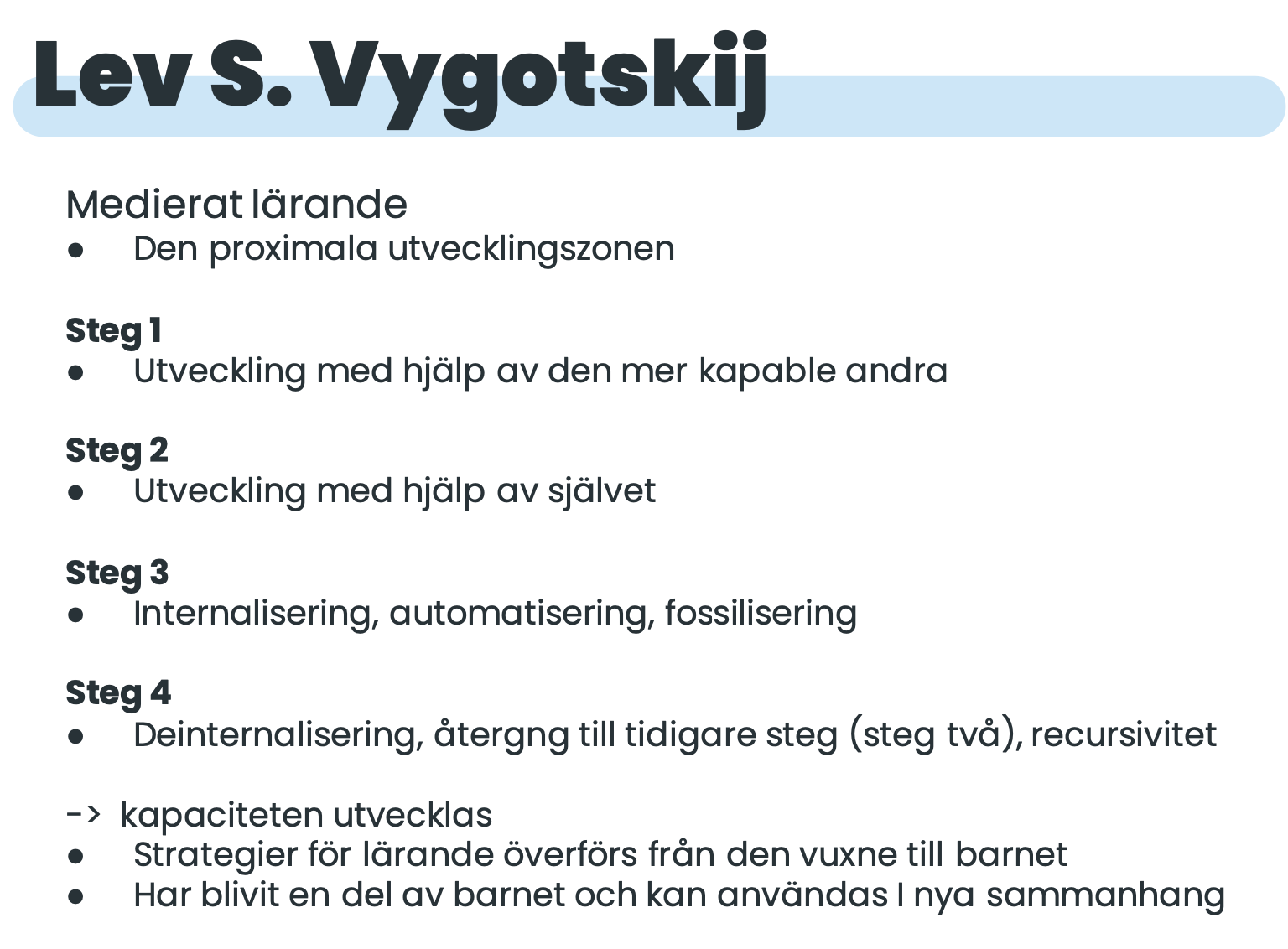
Figure 5. Group 2’s slide about Vygotsky did not include Co-pilot’s suggestions about mediated learning; instead, it focused on complicated steps and concepts related to the proximal development zone.
Group 2’s presentation seemed hesitant about employing GAI and the assignment requirements, suggesting epistemic tensions probably relating to their naïve prompting strategies and limited pedagogical-historical knowledge (Tassoti, 2024). Group 2 prompted ChatGPT to briefly explain the meaning of rational and empirical approaches (Figure 6). The concepts became part of their presentation of Kant, although ChatGPT was not referenced. The ChatGPT suggestions were factually correct and included generic statements about rationality involving judgments based on reason and arguments, while empiricism is based on observations and experience. The prompt produced conceptual explanations about philosophical matters rather than reflections on educational ideas, pointing to a general approach to education, not Bildung ideas like the assignment required. In Figure 7, the slide covered Kant’s contributions to philosophy, education and the categorical imperative, creating a content-heavy presentation. Only one bullet point in the presentation explicitly related to Kant’s ideas on Bildung. ChatGPT was not mentioned in Figure 7, rendering it invisible compared to the course book that was mentioned four times. Still, GAI-generated content is not unimportant since the prompts shape the GAI answers (Tassoti, 2024). Prompts could offer lively interplays if students were encouraged to consider their prior knowledge in light of the course literature and GAI suggestions. Including GAI in previous study strategies with course books may create less speculative and, instead, lively interplays of Bildung, something that Group 2 seemed comfortable with when considering the reliance on the book (Humboldt, 2010).
In the analysis, I attuned to how the course book was referenced throughout the slide, with direct quotations and specific page numbers highlighting the book’s contribution to the presentation. The technical similarity of academic referencing styles in higher education is striking, for example, the author’s name, year of publication, quotation marks, and page numbers. PowerPoint created a different way to highlight some words in a bold font and bullet points. In PowerPoint, the narrative about Kant’s Bildung transformed into fragmented sentences and loosely related concepts and statements, resulting in a collapsed narrative that did not discuss his epistemic contributions to Bildung or AI (Adams, 2010). Interestingly, the two first bullet points have no reference, possibly because the students relied on the GAI answer in the prompt already included in the presentation or were reluctant to include GAI.
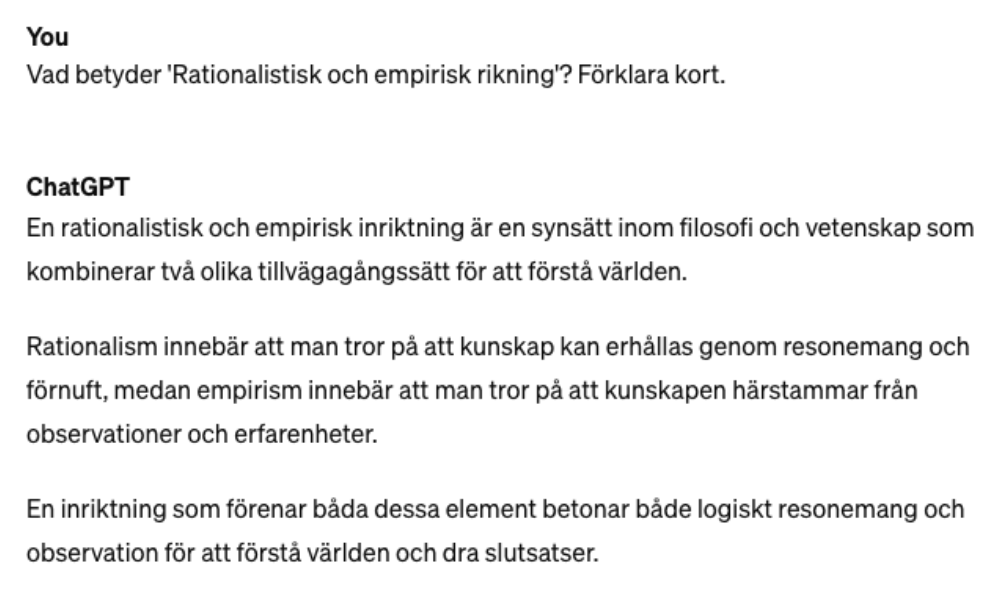
Figure 6. Group 2’s prompt about brief conceptual clarifications about rationalist and empiricist approaches.
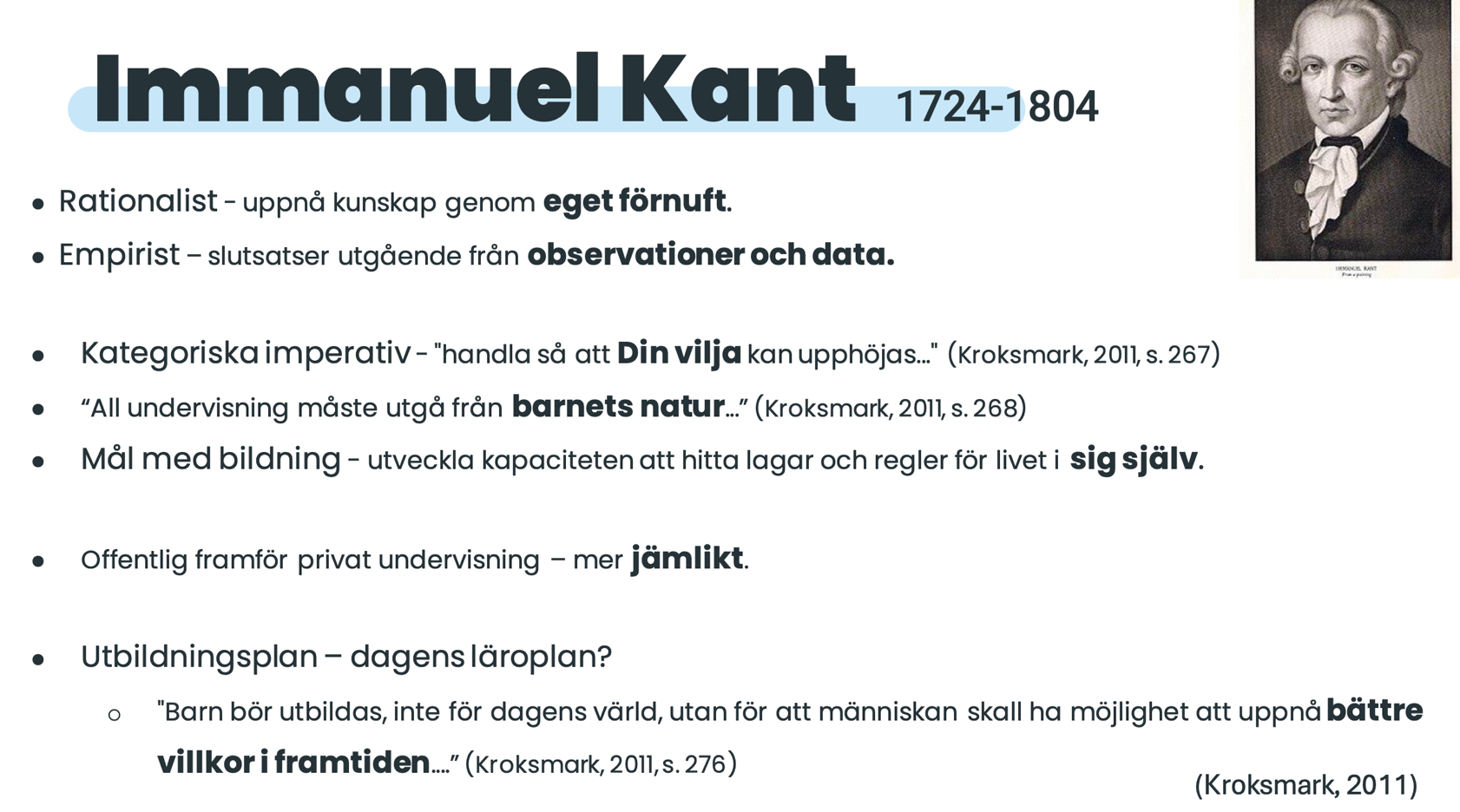
Figure 7. Group 2’s slide about Kant, in which ChatGPT contributed but was not credited for its input on rationalism and empiricism.
The analysis suggests lively interplays become epistemically and ethically productive when tending to complexities like hesitations. Group 1 prompted ChatGPT to summarise Comenius’ thoughts about Bildung in bullet points (Figure 8). ChatGPT’s suggestions were factually correct but written with a modern vocabulary. Concepts like active learning and holistic, accessible, and inclusive education were uncommon in the 1600s, pointing to ChatGPT’s lack of contextual and historical accuracy compared to the course literature. During the oral presentation, the students confessed they hesitated about some of ChatGPT’s points since they did not follow the course literature. The students relied on course literature in this hesitant but lively interplay when presenting Comenius' ideas (Figure 9). The analysis suggests that the epistemic hesitations became judgment calls where students could base arguments on reliable matters as Group 2 did in their presentation of Kant and, therefore, contributed to a lively Bildung interplay (Humboldt, 2010), compared to the analysis of the Vygotsky slides where the hesitations produced epistemically speculative study practices.
ChatGPT provided information quickly and created summaries, overviews, and lists that the students appreciated; it simultaneously forced them to evaluate the information, pointing to epistemic and ethical potentials and tensions. The analysis implies that although GAI can engage students by managing large quantities of data, it can create hesitations that hamper the Bildung processes if students cannot critically examine the GAI-generated content (Humboldt, 2010). The interplay can become hesitant or speculative if the humans, GAI, and other matters like coursebooks and assignments do not connect meaningfully.
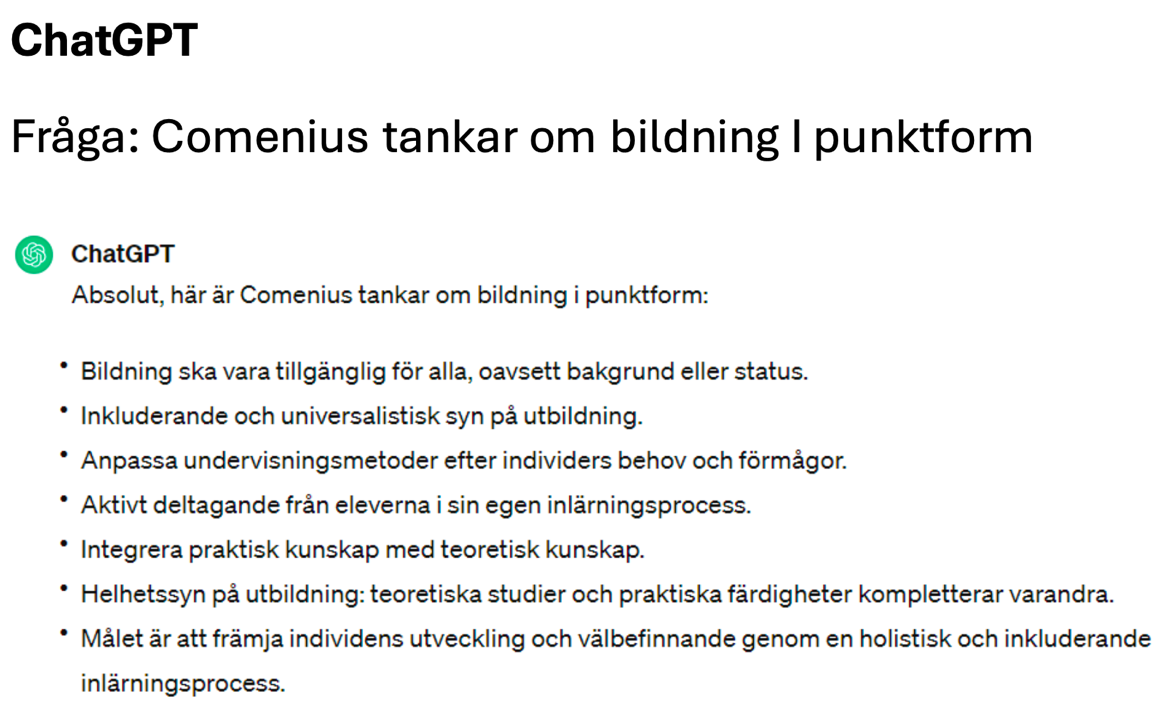
Figure 8. Group 1’s screenshot of their prompt to ChatGPT about Comenius’ views on Bildung in bullet points.
In Figure 9, the students provided a historical but unnecessary overview of Comenius’ educational ideas instead of focusing on some of his ideas on Bildung. PowerPoint’s functions contributed to the design, such as lists of short sentences diverging from the oral presentation. The slide fascinated me because it included an overload of bullet points within bullet points. It became filled with information that only partly related to the assignment, with aesthetically questionable effects.
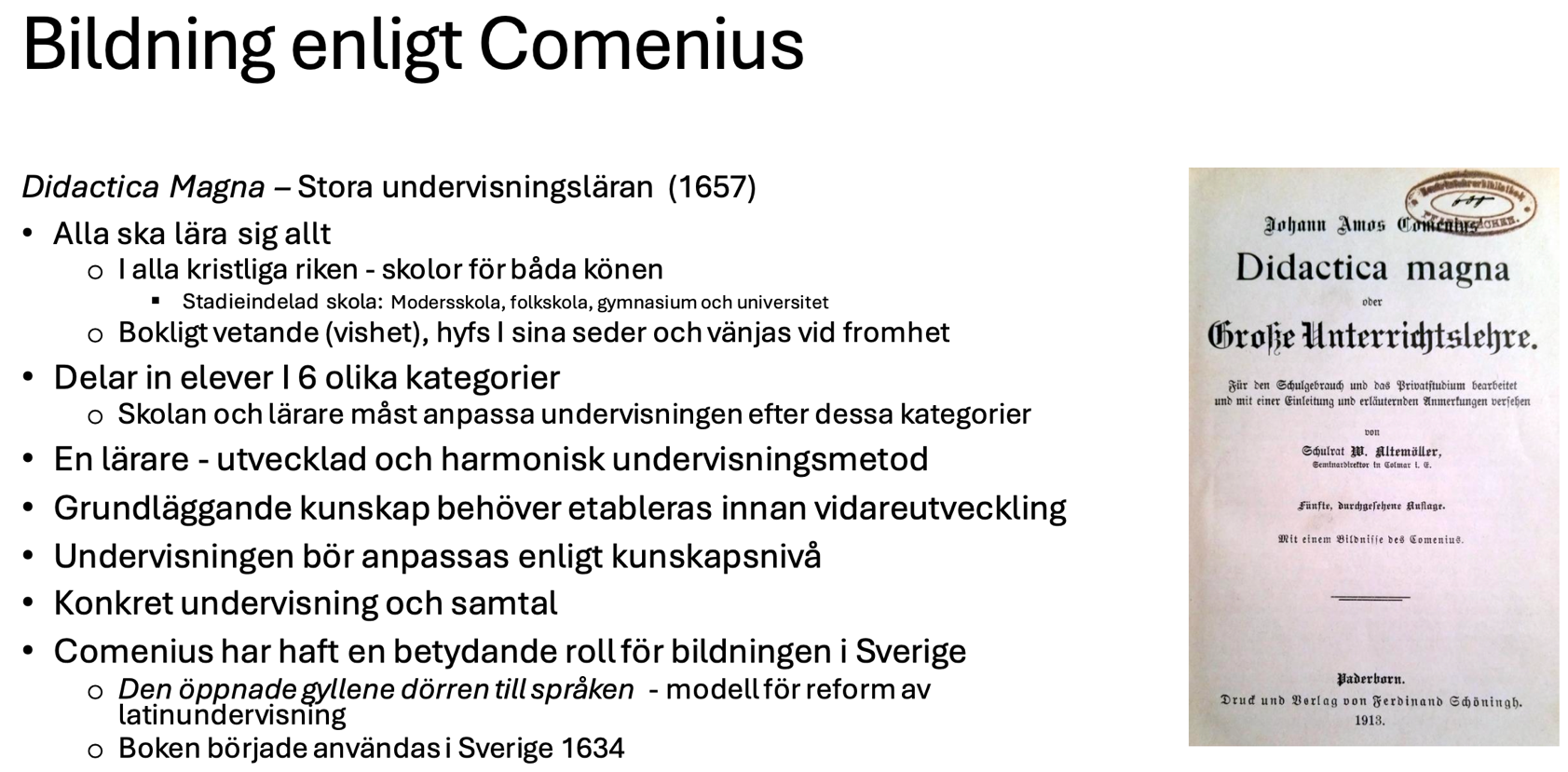
Figure 9. Group 1’s slide about Comenius with bullet points within bullet points with information more or less relevant to the assignment.
PowerPoint could have improved the presentations by suggesting condensed content, making aesthetic improvements, and checking the language. PowerPoint, or the students could have corrected spelling errors (I for i). Similar errors occurred in most slides, suggesting students were unaware of them. The analysis implies that the students had limited procedural knowledge (Adams, 2010) about how to use PowerPoint’s language settings to their benefit as presenters. For example, changing the English version to Swedish relates to the epistemic and ethical hesitations regarding digital technologies’ contributions to study practices. Aesthetically, the slides followed the individual students' input, creating a less homogeneous presentation. Still, the students took ownership of their slides, possibly because the assignment required them to, and it became a way to share the responsibility. Additionally, the aesthetic aspects of Bildung can draw attention to the fact that the PowerPoint slides became information-heavy rather than aesthetically appealing, for example, by removing bullet points in favour of a joint narrative or ease of reading. Furthermore, pictures were included but not referred to in the presentation, suggesting they were ornamental rather than supportive of arguments or facts.
The analysis suggests that hesitations can become productive because they point to students' ethical and epistemic problems. The interplays relate to contextual matters (e.g., course assignments, teaching methods) that may offer new insights into tensions and potentials with the pedagogical practice. The course assignment, the time frame (25 minutes per presentation), and the course literature did not help the groups focus their prompts or presentations, pointing to epistemic speculations rather than lively interplays (Humboldt, 2010).
Discussion and conclusion
This postqualitative pilot study confirms previous research stating that students approach GAI in diverse manners and successful prompting strategies are shaped by epistemic matters like content and procedural knowledge (Ngyuen et al., 2024; Tassoti, 2024; Yang et al., 2024). Still, GAI disconnects from contextual matters and bases suggestions on predictions and advanced statistical models, not pedagogical theories about knowledge and ethical responsibilities towards humans and nature; thus, teachers need to address pedagogical values and ideas if GAI is included for students (Hasse & Bruun, 2023; Milano et al., 2023). Redesigning assignments to support student prompting strategies by involving other humans (teachers, experts, students) and matter (e.g., course literature) also seems prudent (Ou et al., 2024).
In this study, prompts to GAI offered diverse material starting points for studying for the assignment: an oral group presentation. GAI quickly compiled data for the students but simultaneously forced them to evaluate it, creating epistemic and ethical speculations and hesitations. The current study contrasts the optimism of Javaid et al. (2023), who claim that students may feel self-assured by collaborating with ChatGPT with students who were hesitant or unsure how to involve GAI meaningfully in their digital study practices, as noted by other studies (Darvishi et al., 2024; Johnston et al., 2024; Ou et al., 2024; Yang et al., 2024). So far, GAI anticipates information that may be contextually irrelevant or fabricates answers, making it epistemically and ethically questionable in higher education (Hasse & Bruun, 2023). ChatGPT’s lack of historical accuracy in this study created a hesitant interplay that forced students to make judgement calls and consider other relevant sources (e.g., course literature) for a factually correct presentation. At the same time, ChatGPT and Co-pilot became invisible contributors needing closer scrutiny to address the speculative and hesitant tensions to make the potential connections between GAI, humans and contextual matters lively in a Bildung sense (Humboldt, 2010).
Although the study started with an interest in generative artificial intelligence, a surprising material force became PowerPoint. It created contextually disconnected presentations focused on bullet points, sub-points, and lists rather than in-depth understandings, which Adams (2010) calls a collapsed narrative. Rather than telling an engaging story, PowerPoint may turn the user’s attention to formatting and aesthetic matters, which also seemed to happen in this study. PowerPoint shaped the presentations by fragmenting and disconnecting the information in the slides from the course assignment. Ideally, PowerPoint can contribute to checking spelling and creating focused and aesthetically appealing presentations. The study implies that students’ digital study practices include developing procedural knowledge about digital presentation technologies and communication skills relevant to academic presentations in higher education in line with previous research (Gourley, 2021; Ou et al., 2024).
The study offers sociomaterial and pedagogical perspectives on digital study practices shared between humans, course matters and digital technologies (Fawns, 2022; Gourley, 2021). Higher education can support teachers and students in a digital age by addressing the contextually sensitive tensions and potential of interplays between humans and contextual and digital matters. Students' limited content and procedural knowledge may complicate the study practices and lead to hesitations or speculations that strain the potential of lively relations with the world. The study suggests that lively interplays welcome humans and different materialities relevant to digital study practices in higher education (Gourley, 2021; Humboldt, 2010). The interplays are not static and most likely shift with the student’s procedural and content knowledge, contextual matters and digital technologies.
Acknowledgements:
I am grateful to the editors, reviewers, and Sofia Jusslin, who provided thoughtful comments on the draft.
References
Adams, C. A. (2010). Teachers Building Dwelling Thinking with Slideware. Indo-Pacific Journal of Phenomenology, 10(1), 1–12. https://doi.org/10.2989/IPJP.2010.10.1.3.1075
Adams, C. A., & Thompson, T. L. (2016). Researching a Posthuman World. Interviews with Digital Objects. Palgrave Macmillan.
Baidoo-Anu, D., & Owusu Ansah, L. (2023). Education in the Era of Generative Artificial Intelligence (AI): Understanding the Potential Benefits of ChatGPT in Promoting Teaching and Learning. Journal of AI, 7 (1), 52-62. https://dx.doi.org/10.2139/ssrn.4337484
Bahroun, Z., Anane, C., Ahmed, V., & Zacca, A. (2023). Transforming Education: A Comprehensive Review of Generative Artificial Intelligence in Educational Settings through Bibliometric and Content Analysis. Sustainability 15, 12983. https://doi.org/10.3390/su151712983
Barnett, R. (2024). Can we please stop talking about ‘Bildung’ - and for that matter, too, ‘the Humboldtian university’? Journal of Praxis in Higher Education, 6 (3), 45-66.
Bohlin, H. (2008). "Bildung" and Moral Self-Cultivation in Higher Education: What Does It Mean and How Can It Be Achieved? Forum on Public Policy Online.
Bond, M., Khosravi, H., De Laat, M., Bergdahl, N., Negrea, V., Oxley, E., Pham, P., Chong, S. W., & Siemens, G. (2024). A meta systematic review of artificial intelligence in higher education: a call for increased ethics, collaboration, and rigour. International Journal of Educational Technology in Higher Education 21, 4: https://doi.org/10.1186/s41239-023-00436-z
Chan, C. K. Y. (2023). A comprehensive AI policy education framework for university teaching and learning. International Journal of Educational Technology in Higher Education 20 (1): 1–25. https://doi.org/10.1186/s41239-023-00408-3
Darvishi, A., H. Khosravi, S. Sadiq, D. Gašević, & G. Siemens. 2024. Impact of AI Assistance on Student Agency. Computers & Education 210: 104967. https://doi.org/10.1016/j.compedu.2023.104967
Farrelly, T., & Baker, N. (2023). Generative Artificial Intelligence: Implications and Considerations for Higher Education Practice. Education Sciences, 13, 1109. https://doi.org/10.3390/educsci13111109
Fawns, T. (2022). An Entangled Pedagogy: Looking Beyond the Pedagogy—Technology Dichotomy. Postdigital Science and Education, 4, 711–728. https://doi.org/10.1007/s42438-022-00302-7
Fenwick, T., Edwards, R., & Sawchuck, P. (2011). Emerging Approaches to Educational Research: Tracing the Socio-Material. Taylor & Francis.
Finnish National Board on Research Integrity. (2019). The ethical principles of research with human participants and ethical review in the human sciences in Finland. Tenk Publications. https://www.tenk.fi/en
Gourley, L. (2021). Posthumanism and The Digital University. Bloomsbury.
Hasse, C., & Bruun, M. H. (2023). ChatGPT minder os om det gode ved uvidenhed. Videnskab.dk. Read 19.06.2024: https://videnskab.dk/teknologi/ChatGPT-minder-os-om-det-gode-ved-uvidenhed/
Horlacher, R. (2016). The Educated Subject and the German Concept of Bildung. A Comparative Cultural History. Routledge.
Humboldt, W. von. (2010). Theory of Bildung. G. Horton-Krüger (Transl.). In I. Westbury, S. Hopmann & K. Riquarts (Eds.) Teaching as a Reflective Practice. The German Didaktik Tradition (pp. 57-61). Routledge.
Jackson, A. Y., & Mazzei, L. (2023). Thinking with Theory in Qualitative Research. Routledge.
Javaid, M., Haleem, A., Singh, R.P., Khan, S., & Khan, I.H. (2023). Unlocking opportunities through the ChatGPT Tool towards ameliorating the education system. BenchCouncil transactions on Benchmarks. Standards & Evaluations 3 (2), 1–12. https://doi.org/10.1016/j.tbench.2023.100115
Johnston, H., Wells, R.F., Shanks, E.M., Boey, T., & Parsons, B. N. (2024). Student perspectives on the use of generative artificial intelligence technologies in higher education. International Journal for Educational Integrity 20 (2). https://doi.org/10.1007/s40979-024-00149-4
Kroksmark, T. (2011). Den tidlösa pedagogiken. Studentlitteratur.
Lüth, C. (2010). On Wilhelm von Humboldt’s Theory of Bildung. G. Horton-Krüger (Transl.). In I. Westbury, S. Hopmann & K. Riquarts (Eds.) Teaching as a Reflective Practice. The German Didaktik Tradition (pp. 63-84). Routledge.
Milano, S., McGrane, J.A., & Leonelli, S. (2023) Large language models challenge the future of higher education. Nature Machine Intelligence 5, 333–334. https://doi.org/10.1038/s42256-023-00644-2
Nguyen, A., Hong, Y., Dang, B., & Huang, X. (2024). Human-AI collaboration patterns in AI-assisted academic writing. Studies in Higher Education, 49(5), 847–864. https://doi.org/10.1080/03075079.2024.2323593
Ou, A. W., Stöhr, C., & Malmström, H. (2024). Academic communication with AI-powered language tools in higher education: From a post-humanist perspective. System 121. https://doi.org/10.1016/j.system.2024.103225
Pastuhov, A. (2017). The Ideals and Practices of Citizenship in Nordic Study Circles. In M. Milana, S. Webb, J. Holford, R. Waller & P. Jarvis, The Palgrave International Handbook on Adult and Lifelong Education and Learning (pp. 797-815). Palgrave Macmillan.
Sjöström, J., & Eilks, I. (2021). The Bildung theory – from von Humboldt to Klafki and Beyond. In B. Akpan and T. Kennedy (eds.), Science Education in Theory and Practice (pp. 55-67), Springer Texts in Education. https://doi.org/10.1007/978-3-030-43620-9_5
Springgay, S., & Truman, S. E. (2018). On the Need for Methods Beyond Proceduralism: Speculative Middles, (In) Tensions, and Response-Ability in Research. Qualitative Inquiry, 24 (3), 203-214. https://doi.org/10.1177/1077800417704464
Tassoti, S. (2024). Assessement of Students Use of Generative Artificial Intelligence: Prompting Strategies and Prompt Engineering in Chemistry Education. Journal of Chemistry Education, 101 (6), 2475-2482. https://doi.org/10.1021/acs.jchemed.4c00212
Taylor, C. (2017). Is a posthumanist Bildung possible? Reclaiming the promise of Bildung for contemporary higher education. Higher Education, 74, 419-435. 10.1007/s10734-016-9994-y
Wiberg, M. (2016). Dannelsesbegrebets rolle som regulativ ide i teoretisk pædagogik – Dannelsesbegrebet og den pædagogiske forskning. Studier i Pædagogisk Filosofi 1, 81–95. https://tidsskrift.dk/spf/article/view/23242/21749
Yang, Y., Luo, J., Yang, M., Yang, R., & Chen, J. (2024). From surface to deep learning approaches with Generative AI in higher education: an analytical framework of student agency. Studies in Higher Education, 1–14. https://doi.org/10.1080/03075079.2024.2327003
Öberg, L. (2011). Det bildande seminariet. In A. Burman (Ed.) Våga veta! Om bildningens möjligheter i massutbildningens tidevarv (pp. 51-73). Södertörns högskola.
Author
|
Charlotta Hilli University lecturer Institution of Education, Faculty of Human and Social Sciences, Åbo Akademi University, Finland https://orcid.org/0000-0003-1905-1986
|
|